
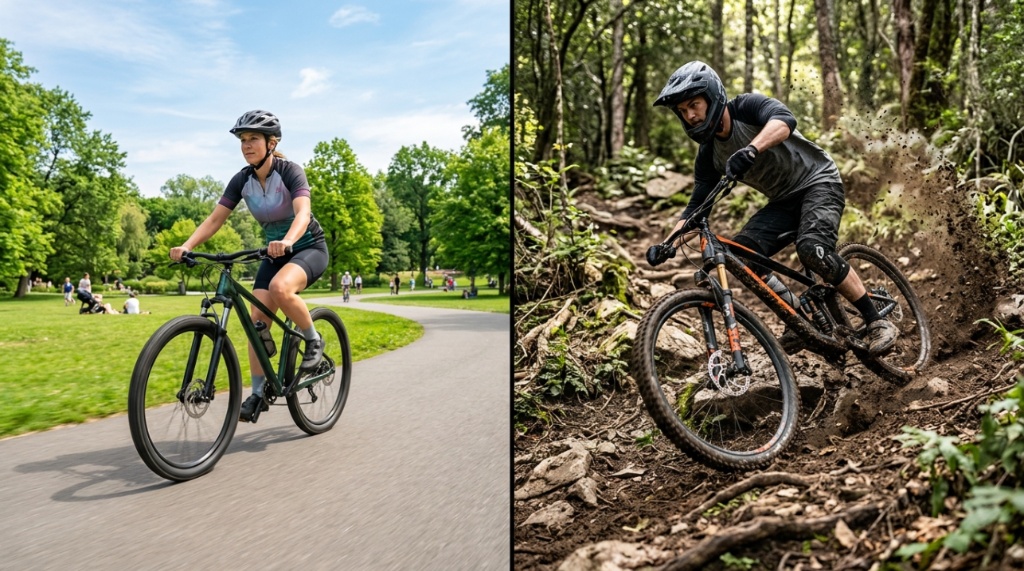
You’ve decided to buy a mountain bike, but now you’re staring at two seemingly similar categories: recreational and trail. It feels like picking between a sedan and an SUV—both get you there, but the experience is wildly different. The problem is that buying the wrong type can turn a fun hobby into a frustrating, expensive mistake.
What Exactly Defines a Recreational Mountain Bike?
A recreational mountain bike is designed for casual, low-intensity riding on smooth, flat, or gently rolling terrain. Think paved bike paths, wide gravel roads, and well-maintained park trails. These bikes prioritize comfort, stability, and ease of use over aggressive performance.
Recreational bikes typically feature a relaxed geometry. The frame places you in a more upright sitting position, which reduces strain on your back and neck. They often come with wider, padded seats and softer suspension forks (usually 60–80mm of travel) designed to soak up small bumps rather than big drops. Tires are often smoother with less aggressive tread, rolling easily on pavement but sacrificing grip on loose dirt.
Who Is the Recreational Mountain Bike For?
This bike is perfect for the weekend rider, the fitness commuter, or the parent riding with kids. If your “trail” is a local greenway or a dirt path through the neighborhood park, a recreational bike is your best bet. It is also ideal for beginners who want a comfortable introduction to cycling without the technical demands of a true trail bike.
Key Components of a Recreational Bike
- Frame: Often heavier aluminum or even steel for durability and cost savings.
- Suspension: Entry-level coil springs that are fine for gravel but inadequate for rocks.
- Gearing: A wide range of gears, often with a simpler drivetrain (3×7 or 3×8 speeds).
- Brakes: Often mechanical disc brakes or basic rim brakes, which are less powerful in wet conditions.
What Exactly Defines a Trail Mountain Bike?
A trail mountain bike is built for performance, durability, and control on technical, undulating singletrack. It is the “Goldilocks” of mountain biking—versatile enough to climb efficiently and descend aggressively. These bikes are the standard for riders who want to tackle roots, rocks, and moderate jumps.
Trail bikes feature a more aggressive, “slack” geometry. The rider sits lower and more forward, optimizing weight distribution for steep climbs and descents. They typically have longer suspension travel (120–140mm) with air shocks that provide better tuning and responsiveness. Tires are wider (2.3–2.6 inches) with aggressive knobby tread for maximum grip on loose terrain.
Who Is the Trail Mountain Bike For?
This bike is for the enthusiast who actively seeks out challenges. If your goal is to ride singletrack in a state park, hit flow trails, or start learning basic jumps and drops, a trail bike is the correct tool. It is also a great choice for intermediate riders looking to progress their skills.
Key Components of a Trail Bike
- Frame: Lightweight, high-strength aluminum or carbon fiber for responsive handling.
- Suspension: Air-sprung forks with adjustable rebound and compression to fine-tune the ride.
- Gearing: A 1x drivetrain (one front chainring) with a wide-range cassette for simplicity and climbing power.
- Brakes: Hydraulic disc brakes that offer consistent, powerful stopping in mud and rain.
How Do Suspension and Travel Differ Between the Two?
Travel is the amount of distance your suspension can compress, measured in millimeters. This is the single most defining mechanical difference between recreational and trail bikes. Recreational bikes have 60–80mm of travel, while trail bikes have 120–140mm.
The shorter travel on a recreational bike is tuned for efficiency on flat ground. It prevents energy-wasting bob when you pedal, but it will bottom out hard on a root or rock. Longer travel on a trail bike is designed to absorb impacts and maintain tire contact with the ground over obstacles, giving you control and traction at speed. A recreational mountain bike comparison is the exact framework you need to make a confident choice. Let’s break down the real differences so you can ride happy, not regretful.
Hardtail vs. Full Suspension
Most recreational bikes are hardtails (front suspension only) because they are cheaper and lighter. Trail bikes come in both hardtail and full-suspension variants. A full-suspension trail bike (130mm front/130mm rear) is the standard for serious riding, as it provides traction and comfort on descents while remaining efficient enough to climb.
Which Geometry Is Better for Your Riding Style?
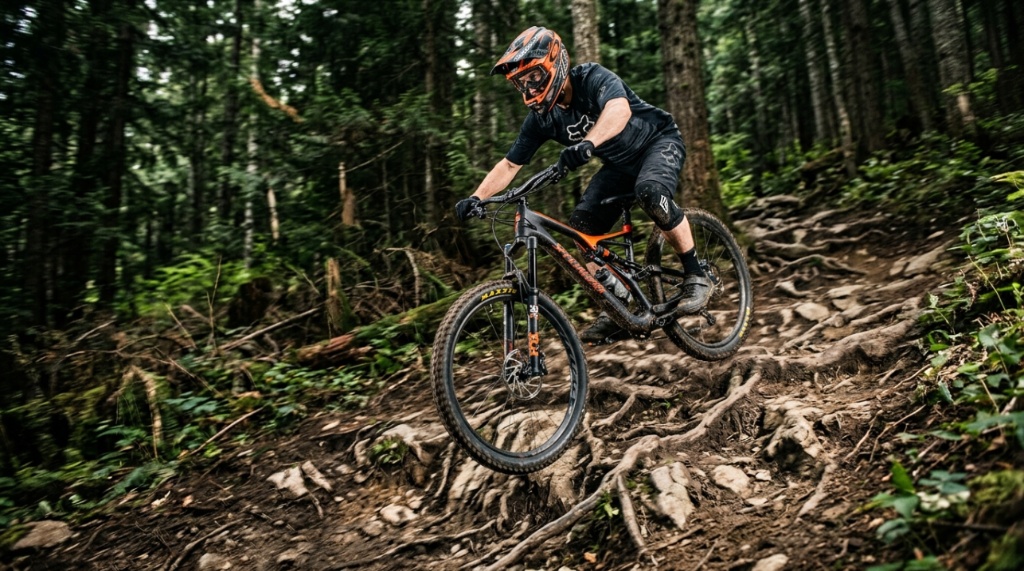
Geometry dictates how a bike handles. Recreational bikes have a short wheelbase and steep head angle (around 70–72 degrees), making them quick to turn at low speeds but twitchy at high speeds. Trail bikes have a longer wheelbase and slacker head angle (65–68 degrees), providing stability at speed and confidence on steep descents.
Consider your typical speed and terrain. If you ride slower than 10 mph on flat paths, a recreational geometry is perfectly safe and comfortable. If you ride downhill at 15–20 mph, a trail geometry is necessary to prevent the front wheel from washing out or the bike feeling unstable.
Reach and Stack Measurements
Reach (horizontal distance to the handlebars) is shorter on recreational bikes, giving an upright position. Trail bikes have a longer reach, stretching the rider out for better control and weight distribution. A longer reach is essential for preventing “over-the-bars” crashes on descents.
How Do Tires Affect Performance on Each Type?
Tires are your only contact with the ground. Recreational bikes use slicker, narrower tires (1.95–2.1 inches) with low rolling resistance for pavement and hardpack. Trail bikes use wider, knobbier tires (2.3–2.6 inches) that grip loose soil, mud, and rocks.
The trade-off is speed versus grip. A recreational tire will feel fast on the road but will slide out on a loose corner. A trail tire feels sluggish on pavement but inspires confidence on singletrack. If you ride a mix of pavement and dirt, you can compromise with a semi-slick tire with light side knobs.
Tire Pressure Differences
Recreational bikes often run higher tire pressure (40–50 psi) to reduce rolling resistance. Trail bikes run much lower pressure (22–30 psi) to allow the tire to deform over obstacles for traction. Running trail tires at high pressure defeats their purpose.
Can a Recreational Bike Handle Trail Riding?
Technically, yes, but it is dangerous and unpleasant. A recreational bike can survive a green (easiest) trail if you ride slowly and avoid obstacles. However, the lack of suspension, weak brakes, and upright geometry make it prone to crashing on blue or black trails.
The real risk is component failure. The fork on a recreational bike is not designed to absorb repeated impacts from rocks and drops. Over time, the stanchions can bend, or the fork can lock up, sending you over the handlebars. The tires will also lose traction, increasing the likelihood of a fall. For the safety and enjoyment of the sport, use a trail bike for trail riding.
Recreational mountain bikes generally offer an upright, comfortable riding position, whereas trail bikes feature a slacker geometry built for stability on steep descents. Getting the right fit for your riding style is crucial across all cycling disciplines. If you are also exploring smaller, stunt-focused setups, check out our BMX Bike Frame Measurements Easy Guideline to ensure you get a perfect fit.
How Much Should You Spend on Each Type?
Budget is a clear differentiator. A decent recreational mountain bike costs between $300 and $800. A decent trail mountain bike typically starts at $900 and goes up to $4,000 or more for premium models.
The price gap comes from components. A recreational bike uses low-end suspension, basic drivetrains, and heavy wheels. A trail bike uses mid-range to high-end components that are lighter, stronger, and more reliable under stress. Spending $500 on a recreational bike is a good value for paved paths. Spending $500 on a trail bike often means buying a heavy, poorly equipped bike that will fail quickly.
Where to Save and Where to Splurge
- Save on: Frame material (choose aluminum over carbon), wheels, and saddle (which you can upgrade later).
- Splurge on: Suspension, brakes, and drivetrain—these are the hardest and most expensive to upgrade.
What Maintenance Differences Should You Expect?
Recreational bikes require less frequent, simpler maintenance. They live a cushy life on smooth terrain. You will mainly need to lubricate the chain, check tire pressure, and tighten bolts. Brake and gear adjustments are straightforward.
Trail bikes demand consistent, detailed maintenance. Mud and grit wear down drivetrain components faster. Suspension requires annual service (oil and seal changes) to maintain performance. Hydraulic brakes need periodic bleeding. Committing to a trail bike means committing to either learning maintenance skills or paying a shop for regular service.
How to Match Your Local Trails to the Right Bike
Use your local terrain as the deciding factor. Visit a local riding spot and look at the trail difficulty markers. Green circles are for beginners and perfect for recreational bikes. Blue squares indicate some technical features (roots, rocks) that require a trail bike. Black diamonds are for advanced riders only.
If 80% of your local trails are green circles, a recreational bike with semi-knobby tires is a smart, economical choice. If you have access to blue and black trails within a 30-minute drive, invest in a trail bike. Renting a trail bike for a day at a local park is a great way to test before you buy.
Pros and Cons Quick Comparison
| Feature | Recreational Mountain Bike | Trail Mountain Bike |
|---|---|---|
| Terrain | Pavement, gravel, smooth dirt | Singletrack, roots, rocks, moderate drops |
| Suspension Travel | 60–80mm | 120–140mm |
| Riding Position | Upright, comfortable | Aggressive, forward-leaning |
| Tire Width | 1.95–2.1 inches | 2.3–2.6 inches |
| Brake Type | Mechanical disc or rim | Hydraulic disc |
| Average Price | $300 – $800 | $900 – $4,000+ |
| Best For | Fitness, commuting, family rides | Technical riding, progression, adventure |
Frequently Asked Questions
Can I convert a recreational mountain bike into a trail bike?
Not effectively. The frame geometry, fork, and drivetrain are fundamentally different. Upgrading components like the fork and brakes would cost more than buying a used trail bike, and the frame would still handle poorly on technical terrain.
What is the best brand for a recreational mountain bike?
Brands like Trek (FX series), Giant (Reign for trail, Escape for rec), and Specialized (Sirrus) are reliable. For budget options, brands like Schwinn and Kent are common but use lower-quality components that may wear out quickly.
Is a hardtail trail bike better than a full-suspension recreational bike?
Yes, for off-road use. A hardtail trail bike with 120mm travel, slack geometry, and hydraulic brakes will outperform any full-suspension recreational bike on singletrack. The recreational bike’s suspension is too weak and its geometry too upright for technical riding.
How do I know my size for a recreational vs. trail bike?
Both use similar sizing (S, M, L, XL) based on your height and inseam. However, trail bikes often have a longer reach, so you might prefer a smaller size for agility. Recreational bikes fit true to size. Always test ride or use a manufacturer’s size chart.
Can a trail mountain bike be used for commuting?
Yes, but it is suboptimal. The knobby tires create high rolling resistance, making it slower on pavement. The aggressive geometry is less comfortable for long, flat rides. You can swap tires for semi-slicks, but a recreational bike or hybrid is better for commuting.
Are heavier riders at more risk on a recreational bike on trails?
Yes. Recreational bike frames and forks have lower weight limits and durability standards. Heavier riders (over 200 lbs) are more likely to damage the suspension or frame on technical trails. Trail bikes are built to higher strength standards.
Recreational mountain bikes generally offer an upright, comfortable riding position, whereas trail bikes feature a slacker geometry built for stability on steep descents. Getting the right fit for your riding style is crucial across all cycling disciplines. If you are also exploring smaller, stunt-focused setups, check out our BMX Bike Frame Measurements Easy Guideline to ensure you get a perfect fit.
Conclusion
Choosing between a recreational and trail mountain bike comes down to one honest question: where are you actually going to ride? If your adventures stick to paved paths, gravel roads, and easy green trails, a recreational bike gives you comfort, value, and simplicity. It is the perfect tool for casual fitness and family outings. If your heart is set on exploring blue singletrack, learning to jump, or pushing your limits in the woods, a trail bike is the only safe and enjoyable choice. It costs more, but it delivers control, durability, and the capability to grow with your skills. Do not let a lower price tag trick you into buying a bike that can’t handle your ambitions. Assess your terrain honestly, set a realistic budget for your riding style, and buy the bike that fits your actual—not aspirational—needs. Your first ride on the right bike will confirm you made the perfect choice.