
You’ve got the rod, the reel, and a tackle box full of lures. Yet, somehow, the big ones keep getting away. If you have ever felt that frustrating tug, only to reel in an empty hook, the problem likely isn’t your casting technique—it’s your hook choice. Selecting the right fishing hooks for the species you target is the single most impactful upgrade you can make to your setup. A sharp, properly-sized hook turns near-misses into dinner. The reality is that most anglers spend too much time on flashy lures and not enough time on the small, sharp piece of metal that actually lands the fish. This guide will walk you through exactly how to match your hook to your target, ensuring that your next trophy fish doesn’t get away.
What Makes a Fishing Hook “Good” for Big Fish?
A good fishing hook for big fish must be sharp, strong, and chemically sharpened for instant penetration. For larger species like bass, pike, or catfish, you need a hook with a wide gap and a heavy wire gauge to withstand the pressure of a hard fight. A cheap, dull hook will bend or fail to set, costing you the catch of the day.
The “goodness” of a hook comes down to three core materials: high-carbon steel, vanadium steel, and stainless steel. High-carbon steel is the gold standard for big game because it holds a razor edge and resists bending under heavy loads. You also need to look at the hook point. Needle-point and knife-edge points penetrate faster than standard cones. For larger catches, avoid chemically sharpened hooks that are too brittle; instead, opt for forged hooks that have been heat-treated for strength. The eye of the hook also matters. A braided-line-friendly eye (often called a “needle eye”) reduces friction and allows your line to move freely, preventing break-offs during the strike.
Why Does Hook Size Matter More Than You Think?
Hook size matters because it dictates whether a fish can actually get the hook in its mouth. If the hook is too large, a big bass will feel the metal and spit it out. If it is too small, the hook may not penetrate the tough cartilage of a larger fish’s jaw, leading to a thrown hook during the fight.
The common misconception is that “bigger fish need bigger hooks.” This is only partially true. For mouth-feeding predators like bass, you want a hook that matches the size of the bait, not the size of the fish. For example, a 5/0 hook is perfect for a 6-inch plastic worm, but a 3/0 hook is better for a smaller creature bait. If you are using live bait like shiners or bluegills, the hook should be just large enough to hold the bait without impaling its vital organs. A good rule of thumb is to use the smallest hook that can still handle the weight of the fish. This increases your hook-up ratio significantly.
How Do You Choose the Right Hook Style?
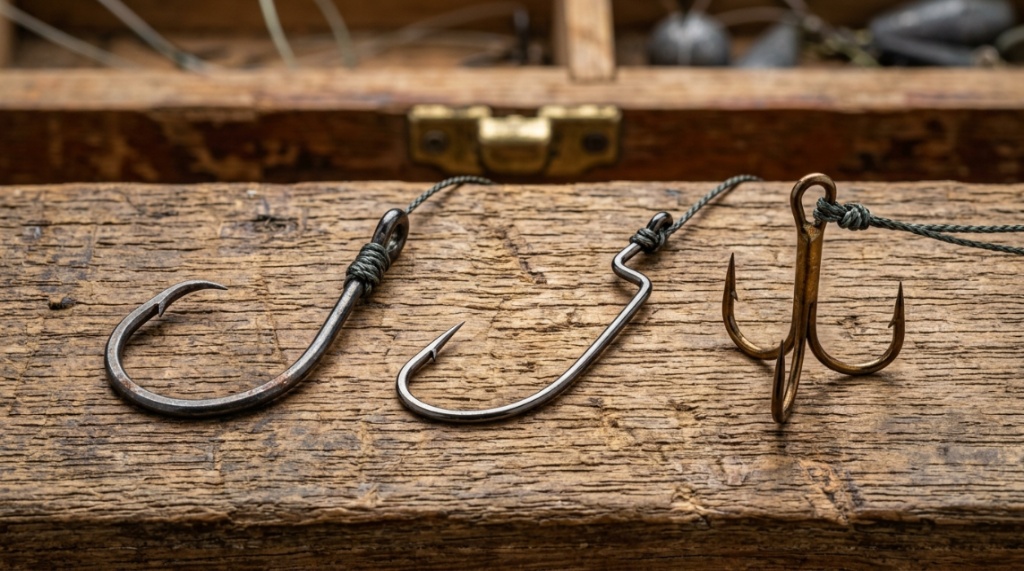
You choose the right hook style by matching it to your presentation technique and bait type. For soft plastics, use an offset worm hook. For live bait, use a circle hook. For crankbaits, use a treble hook. Each style has a specific job, and using the wrong one ruins the action of your lure.
Let’s break down the most common styles for bigger catches:
Offset Worm Hooks (Wide Gap)
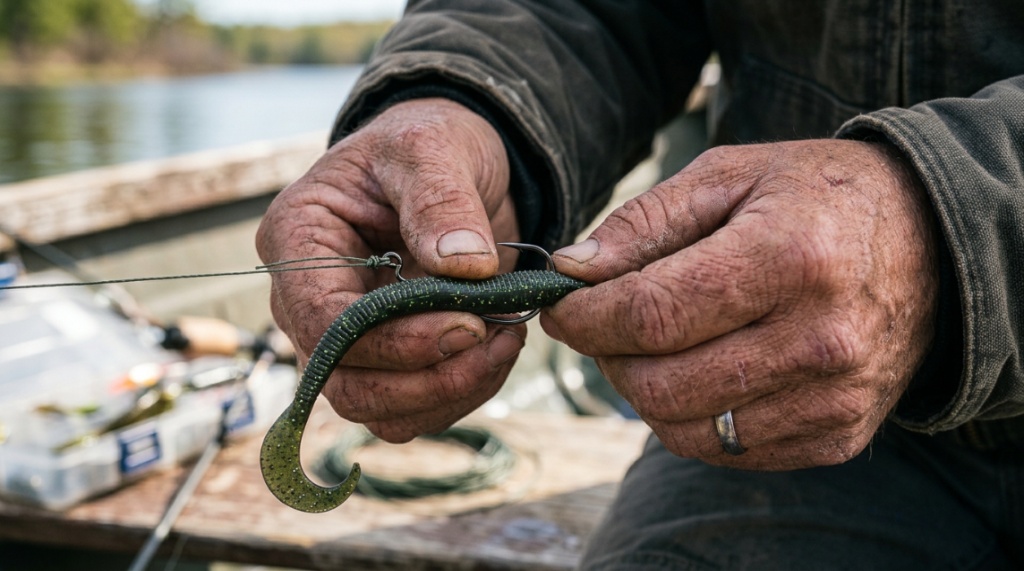
These are the workhorses for bass fishing with soft plastics. The offset bend creates a gap that allows the hook point to rotate into the fish’s jaw when you set the hook. They are excellent for Texas rigs, Carolina rigs, and creature baits. Look for a “Superline” version if you are using braided line, as the eye is reinforced.
Circle Hooks
Circle hooks are designed for live bait fishing. The hook point is turned inward toward the shank. When a fish swallows the bait, the hook slides out of the gut and catches in the corner of the jaw. This is the best choice for catch-and-release because it virtually eliminates deep hooking. They are a must for catfish and striped bass.
Treble Hooks
Best for hard baits like crankbaits, jerkbaits, and topwater lures. The three points increase the chance of hooking a fish that strikes blindly. However, they can be damaging to fish. Upgrade your stock treble hooks to a brand like Gamakatsu or Owner, as factory hooks are often weak and dull.
Jig Hooks
Heavy-wire jig hooks are designed for flipping and pitching into heavy cover. They feature a wide bend and a heavy gauge to punch through grass and wood. They are the strongest style available for bass.
| Hook Style | Best For | Hook Type |
|---|---|---|
| Offset Worm | Soft Plastics (Texas Rig) | Single |
| Circle Hook | Live Bait (Shiners, Worms) | Single |
| Treble Hook | Crankbaits, Topwater | Triple |
| Jig Hook | Heavy Cover, Flipping | Single, Heavy |
Which Hook Brand Is Most Reliable for Bass?
Gamakatsu, Owner, and VMC are the most reliable brands for bass fishing. Gamakatsu is known for its extreme sharpness right out of the package. Owner is famous for its corrosion resistance and strength. VMC offers a great balance of performance and affordability. If you are asking which one to trust for a tournament-winning catch, these three are proven.
Budget brands like Eagle Claw or Mustad are fine for panfish or beginner setups, but for trophy bass, you need a premium Japanese or Nordic hook. The difference is in the tempering process. Premium hooks are heat-treated to be hard but not brittle. A cheap hook will lose its point after a few casts against rocks, while a high-end hook stays sharp for multiple outings. When you invest in a pack of premium fishing hooks fishing hooks for bass, you are buying confidence. You know that when a 5-pounder explodes on your bait, the hook will penetrate and hold.
When Should You Replace Your Hooks?
You should replace your hooks when they fail the thumbnail test. Run the point of the hook across your thumbnail with moderate pressure. If it slides without catching, the hook is dull. You should also replace hooks immediately after catching a fish that has a hard mouth (like a gar) or after snagging on rocks. Dull hooks are the number one cause of missed strikes.
Many anglers make the mistake of keeping the same hooks on a lure for a whole season. This is a mistake. A single hit on a rocky bottom can roll the point. If you are using treble hooks on crankbaits, replace them every 5-10 fishing trips. For worm hooks, replace them as soon as you notice a bend in the wire. A bent hook will ruin the presentation of your plastic bait, causing it to spin unnaturally.
Can You Sharpen Fishing Hooks, or Should You Buy New Ones?
You can sharpen fishing hooks, but it is rarely worth the effort for modern high-carbon hooks. A hook file can restore a dull point, but you will never get the same factory sharpness or the chemical coating that prevents rust. For the price of a hook, buying new ones is usually the best option.
If you are in the middle of a fishing trip and run out of spares, a flat file works well for larger hooks (size 2/0 and up). Slide the file along the inner edge of the point at the same angle as the original bevel. Do not file the tip flat. For small panfish hooks, sharpening is almost impossible because you will remove too much metal. Modern hooks are cheap enough that swapping them out is the smarter play for consistency.
How Does Hook Color Affect Bites?
Hook color affects bites primarily by reducing visibility in clear water. Red hooks are popular because they mimic the color of bleeding gills or crawfish. Black or dark bronze hooks reduce glare in sunny conditions. Silver hooks reflect light and can attract fish in murky water. However, hook color is secondary to sharpness and size.
In clear water, a dark hook (black or matte bronze) is often better because it blends in with the bottom or the shadow of the bait. In stained or muddy water, a red hook can add a subtle trigger. Some anglers swear by “blood red” hooks for night fishing. The truth is, most fish strike based on vibration and silhouette, not the hook color. However, if you are fishing for finicky, pressured bass in a clear lake, painting your hook matte black with a permanent marker can improve your bite count by reducing the metallic flash.
What Is the Best Hook for Catch-and-Release Fishing?
The best hook for catch-and-release fishing is a barbless circle hook. The barbless design allows for quick removal with minimal tissue damage, while the circle shape ensures the hook sets in the corner of the mouth rather than the gut. This combination gives the fish the highest chance of survival after release.
If you prefer to use barbed hooks (which provide better holding power for active fish), you can crush the barb down with a pair of pliers. This makes the hook nearly as safe as a barbless model. For bass specifically, offset worm hooks with a crushed barb are excellent for release because you can remove them with a simple twist. Avoid using treble hooks for catch-and-release if possible, as the three points cause extensive damage. If you must use trebles, replace the stock hooks with a smaller size to minimize injury.
How to Match Hooks to Your Fishing Line
You match hooks to your fishing line by ensuring the hook’s eye size accommodates the line diameter and the hook’s strength matches the line’s test. A heavy braided line requires a hook with a reinforced eye (often labeled “Superline” or “Braid Ready”). If your line is stronger than your hook, the hook will bend out during a fight.
A common pairing guide is as follows:
- 6-10 lb Mono/Fluorocarbon: Fine wire hooks (Size 1-2/0) for finesse bass fishing.
- 12-17 lb Mono/Fluorocarbon: Standard wire hooks (3/0-5/0) for general worm fishing.
- 20-30 lb Braid: Heavy wire or Jig hooks (4/0-6/0) for heavy cover flipping.
- 40-65 lb Braid: Forged, oversized hooks (7/0-10/0) for musky or saltwater.
Another critical factor is the hook eye direction. Standard eyes are turned up or turned down. A turned-down eye (pointing toward the point) is best for sliding rigs like a Carolina rig because the line runs straight. A turned-up eye (pointing toward the shank) is better for Texas rigs because the hook rides with the point up, reducing snags.
Choosing the right hook size is only half the battle; your terminal tackle needs to work in perfect harmony with your rod and reel. If you are looking to upgrade your setup without breaking the bank, make sure to pair your new hooks with the best fishing reels without overspending this year to ensure smooth lines and reliable drag during a tough fight.
Are Expensive Hooks Worth the Investment?
Yes, expensive hooks are worth the investment for serious anglers targeting trophy fish. A $10 pack of Gamakatsu hooks is significantly sharper and stronger than a $3 pack of generic hooks. The cost per hook is minimal compared to the cost of a lost lure or a missed trophy. For casual fishing, budget hooks work fine.
Consider the math: A premium hook costs roughly $0.40 per hook, while a budget hook costs $0.10. If you lose one fish on a budget hook, you have wasted more than the cost of a pack of premium hooks in lost time and frustration. For techniques that require precision—like drop shotting or finesse worming—a sharp, premium hook is non-negotiable. The point of a premium hook is often 30% sharper out of the package and stays sharp 50% longer than budget options. If you fish once a week, spending $10 per season on hooks is a tiny investment for a major upgrade in performance.
Frequently Asked Questions
What size hook is best for bass fishing?
A 3/0 or 4/0 offset worm hook is the most versatile size for bass. It works for most soft plastics and creature baits. For larger lures like big swimbaits, use a 5/0 or 6/0. For finesse lures like dropshot, use a size 1 or 2.
Can I use the same hooks for saltwater and freshwater?
It is not recommended. Saltwater hooks are made with corrosion-resistant coatings. Freshwater hooks will rust quickly in saltwater, leading to hook failure. If you fish both environments, buy specific saltwater hooks.
How do I know if a hook is too big for a fish?
If the hook gap is wider than the fish’s mouth, it is too big. A good check is to hold the hook against the bait. The hook should not extend beyond the width of the bait. If it does, the fish will feel the hook before the bait.
Why do my hooks keep bending?
Your hooks are bending because the wire gauge is too light for the fish size or the cover you are fishing in. Switch to a heavy-duty or forged hook. Also, check your drag setting; a too-tight drag can cause the hook to bend under pressure.
Is a circle hook better than a J-hook for bass?
For live bait, a circle hook is better because it prevents gut hooking. For artificial lures like soft plastics, a J-hook or offset worm hook is better because it provides a more immediate hook set on a reaction strike.
How often should I check my hook sharpness?
You should check your hook sharpness after every 10 casts or after any contact with rocks, wood, or the fish’s mouth. Use the thumbnail test. If it feels dull, swap it immediately.
What does “chemically sharpened” mean on a hook?
Chemically sharpened means the hook point has been dipped in acid to dissolve metal, creating an extremely fine, needle-like point. This improves penetration speed but can make the point slightly more brittle than mechanically sharpened hooks.
Conclusion
Choosing the right fishing hook is not about luck; it is about understanding the mechanics of the bite. You now know that size, style, sharpness, and brand all play crucial roles in landing bigger fish. Stop settling for the stock hooks that come with your lures. Upgrade to a premium brand, match the hook to your bait and line, and keep them sharp. The difference between a good day on the water and a great day is often just a few millimeters of sharpened steel.
Take action today. Go through your tackle box and remove every rusty, dull, or bent hook. Replace them with quality fishing hooks designed for bass. Your next outing will be your most successful yet. Check out our selection of affordable hook kits to ensure you always have the right size on hand.