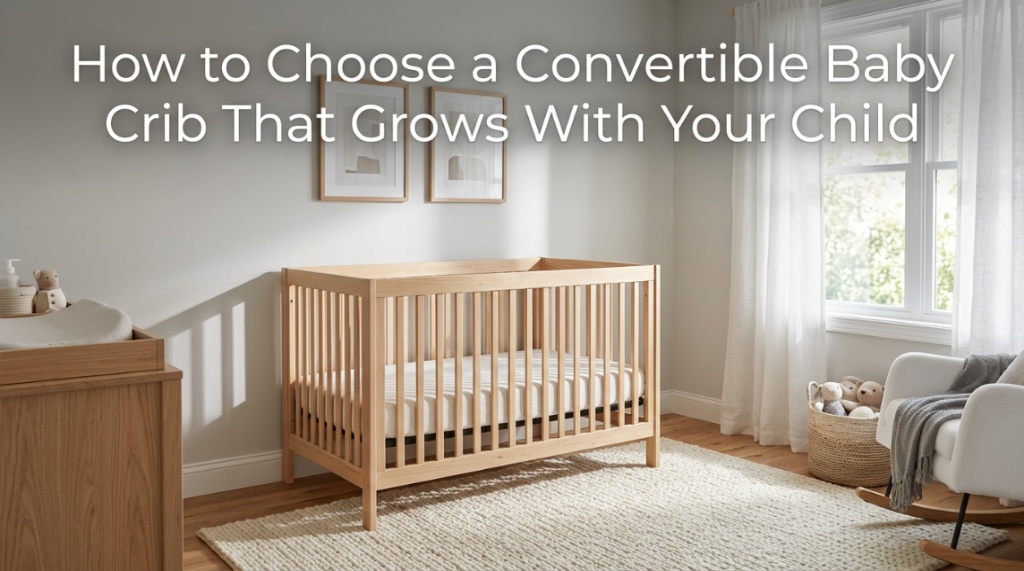
One of the few pieces of furniture that may stay in your home longer than a family car seat is a convertible baby crib. If you’re wondering how to choose a convertible baby crib that grows with your child, the answer is simple: prioritize safety certifications, durable construction, compatible conversion options, and long-term value over appearance alone. A quality convertible crib can transition from infancy to the toddler years and beyond, helping families avoid multiple furniture purchases while maintaining a familiar sleep environment.
Why Are More Parents Choosing Convertible Baby Cribs Instead of Standard Cribs?
Direct answer: Convertible baby cribs offer long-term value because they adapt to different stages of childhood, reducing the need to purchase multiple beds.
Parents today are increasingly focused on products that provide both safety and longevity. A standard crib serves one purpose for a relatively short period. A convertible crib, however, evolves alongside a child’s development.
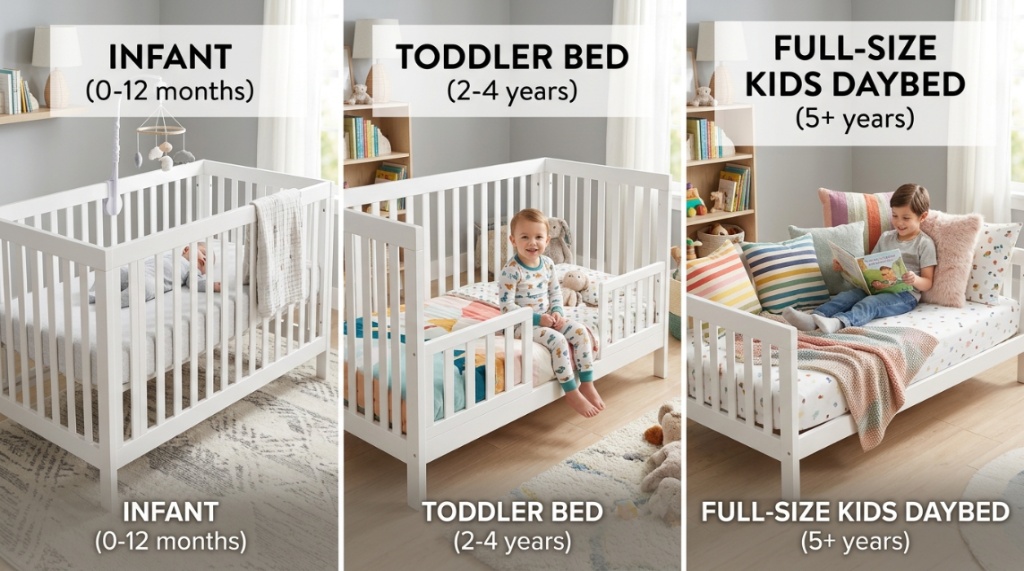
Many modern models convert from a crib into a toddler bed, daybed, and even a full-size bed depending on the configuration. This flexibility makes them an attractive investment for growing families.
According to industry retail trends, convertible cribs consistently rank among the most popular nursery furniture categories because they reduce replacement costs over time and provide greater long-term utility.
Parents who spend time researching developmental milestones often explore resources discussing early childhood growth and activities, such as how families support infant development through structured learning experiences, making adaptable nursery furniture a logical extension of long-term planning.
What Are the Main Benefits of a Convertible Crib?
- Longer usability than standard cribs
- Lower lifetime furniture costs
- Consistent sleeping environment
- Multiple conversion options
- Better long-term value for growing families
- Available in various nursery styles
What Is a Convertible Baby Crib?
Direct answer: A convertible baby crib is a crib designed to transform into one or more additional bed types as a child grows.
Unlike traditional cribs, convertible models include structural designs that allow future modifications without replacing the entire frame.
Most manufacturers offer conversion kits or rails that allow transitions through multiple developmental stages.
Common conversion stages include:
- Baby crib
- Toddler bed
- Daybed
- Full-size bed
The exact conversion path depends on the model purchased.
How Long Does a Convertible Crib Last?
Many high-quality convertible cribs can remain functional from birth until adolescence. Some families report using the same bed frame for more than ten years after converting it through all available stages.
Should You Buy a 3-in-1 Crib or a 4-in-1 Crib?
Direct answer: A 3-in-1 crib is often sufficient for most families, while a 4-in-1 crib offers maximum flexibility and the longest lifespan.
The choice largely depends on budget, available space, and long-term plans.
| Feature | 3-in-1 Crib | 4-in-1 Crib |
|---|---|---|
| Crib Mode | Yes | Yes |
| Toddler Bed | Yes | Yes |
| Daybed | Yes | Yes |
| Full-Size Bed | No | Yes |
| Expected Lifespan | Several years | Up to teenage years |
| Initial Cost | Lower | Higher |
| Long-Term Value | Good | Excellent |
When Is a 3-in-1 Crib the Better Choice?
A 3-in-1 crib may be ideal when:
- You plan to redecorate later
- Budget is a priority
- You expect future furniture upgrades
- Space limitations exist
When Is a 4-in-1 Crib Worth the Extra Cost?
A 4-in-1 crib often makes sense when:
- You want maximum longevity
- You prefer fewer furniture purchases
- You expect to keep furniture for many years
- You value long-term cost efficiency
Which Safety Features Should You Look for in a Convertible Crib?
Direct answer: Look for certified safety standards, sturdy construction, non-toxic finishes, adjustable mattress heights, and proper slat spacing.
Safety should always outweigh aesthetics when selecting nursery furniture.
Reputable manufacturers design cribs to meet current safety regulations established by organizations such as the Consumer Product Safety Commission (CPSC) and ASTM International.
Parents frequently researching childhood behavior and developmental patterns may also find value in learning about topics such as common sensory interests observed in infants and toddlers, helping create a safer and more developmentally supportive environment overall.
What Safety Checklist Should Parents Follow?
- Verify ASTM and CPSC compliance
- Choose solid wood or durable materials
- Ensure slats are properly spaced
- Check for lead-free and non-toxic finishes
- Inspect conversion hardware quality
- Confirm mattress fit without gaps
- Avoid decorative cutouts that may pose risks
Why Is Mattress Fit Important?
A properly fitting mattress minimizes gaps around the edges. Large gaps may create potential entrapment hazards, making correct sizing a critical safety requirement.
What Materials Make the Best Convertible Cribs?
Direct answer: Solid hardwood construction generally offers the best durability, stability, and lifespan.
Materials significantly affect both safety and longevity.
Common Convertible Crib Materials
| Material | Durability | Cost | Best For |
|---|---|---|---|
| Solid Hardwood | Excellent | Higher | Long-term use |
| Pine Wood | Good | Moderate | Budget-conscious families |
| Engineered Wood | Moderate | Lower | Short-term affordability |
| Metal | Very Good | Moderate | Modern nursery designs |
Is Solid Wood Worth the Extra Cost?
For families intending to use the crib through multiple stages or future siblings, solid wood often delivers better value because it withstands years of use without compromising structural integrity.
How Important Are Adjustable Mattress Heights?
Direct answer: Adjustable mattress heights improve safety and convenience by adapting to your child’s mobility as they grow.
Most quality convertible cribs offer multiple mattress positions.
Higher settings simplify newborn care because parents do not need to bend as deeply. As babies begin sitting, pulling up, and standing, lowering the mattress becomes essential to prevent climbing accidents.
Typical Mattress Height Progression
- Highest setting: newborn stage
- Middle setting: rolling and sitting stage
- Lowest setting: standing and climbing stage
Having several adjustment levels extends usability and enhances safety throughout infancy.
How Can You Evaluate Long-Term Value Before Buying?
Direct answer: Compare total ownership costs rather than focusing solely on the initial purchase price.
A convertible crib may appear more expensive initially, but replacing multiple beds over several years often costs significantly more.
Before purchasing, calculate:
- Initial crib cost
- Conversion kit costs
- Toddler rail expenses
- Full-size conversion components
- Expected years of use
Do Conversion Kits Come Included?
Not always. Some manufacturers include toddler rails and conversion hardware, while others sell them separately.
Always verify what is included before making a purchase.
Families comparing regional recommendations and product options can also review detailed crib buying resources such as this guide to highly rated baby crib options and buying considerations when evaluating long-term nursery investments.
What Nursery Space Considerations Matter Most?
Direct answer: Measure both current and future room layouts to ensure the crib fits comfortably throughout every conversion stage.
Many parents focus exclusively on crib dimensions without considering later configurations.
A full-size bed conversion requires considerably more floor space than crib mode.
What Measurements Should You Check?
- Room width and length
- Door clearance
- Window placement
- Dresser spacing
- Changing table placement
- Future bed dimensions
Proper planning prevents expensive furniture rearrangements later.
Which Features Improve Everyday Convenience?
Direct answer: Easy assembly, durable hardware, accessible mattress adjustments, and straightforward conversion processes provide the greatest daily convenience.
Parents interact with nursery furniture every day. Small design improvements can save significant time and frustration.
Convenience Features Worth Considering
- Tool-friendly assembly systems
- Clearly labeled hardware
- Washable surfaces
- Scratch-resistant finishes
- Accessible mattress support systems
- Available replacement parts
Reading customer reviews often reveals practical advantages and drawbacks not visible in product specifications.
How Do You Know a Convertible Crib Is Right for Your Family?
Direct answer: A convertible crib is a smart choice when you value safety, long-term savings, adaptability, and reduced furniture replacement costs.
Not every family requires a premium 4-in-1 model. However, most parents benefit from furniture capable of evolving alongside their child’s growth.
Consider your budget, available space, future family plans, and desired lifespan before making a decision.
The best convertible crib is not necessarily the most expensive model. It is the one that safely supports your child through multiple developmental stages while delivering reliable long-term value.
Conclusion: What Is the Best Way to Choose a Convertible Baby Crib?
Direct answer: Choose a convertible crib that combines certified safety standards, durable construction, flexible conversion options, and realistic long-term value.
A quality convertible crib can support your child from infancy through later childhood while reducing the need for repeated furniture purchases. Whether you select a 3-in-1 crib or invest in a 4-in-1 crib, the most important factors remain safety, durability, compatibility, and ease of conversion.
Take time to compare included accessories, verify certifications, inspect material quality, and plan for future room layouts. Parents who approach nursery planning thoughtfully often create safer and more adaptable environments that support healthy growth and development. For additional insights into early childhood experiences and family-focused parenting topics, resources discussing development-focused activities for babies and young children can provide helpful context when planning for your child’s future.
Investing wisely today can provide years of comfort, safety, and value for your growing family.
Frequently Asked Questions About Convertible Baby Cribs
Is a convertible crib worth the money?
Yes. Convertible cribs often cost more initially but can save money over time by replacing the need for multiple beds during childhood.
What is the difference between a 3-in-1 crib and a 4-in-1 crib?
A 3-in-1 crib typically converts into a toddler bed and daybed. A 4-in-1 crib adds a full-size bed conversion, extending usability for many additional years.
At what age should a baby move from a crib to a toddler bed?
Most children transition between 18 months and 3 years old, depending on mobility, climbing behavior, and developmental readiness.
Do all convertible cribs require a conversion kit?
Many do. Some manufacturers include conversion components, while others sell toddler rails and full-size bed kits separately.
How long can a child use a 4-in-1 crib?
A quality 4-in-1 crib can potentially be used from birth through adolescence when properly converted through each stage.
Are convertible cribs safe for newborns?
Yes. When they meet current safety standards and are assembled correctly with a properly fitting mattress, convertible cribs are safe for newborn sleep.
What material is best for a convertible crib?
Solid hardwood is generally considered the most durable option due to its strength, longevity, and resistance to wear over extended use.