
Living in Florida means dealing with humidity that creates the perfect environment for mold, mildew, and bacteria. When it comes to baby gear, especially a bouncer that sees daily use, that moisture can quickly turn a simple cleaning task into a full-blown battle. You might find yourself scrubbing stubborn mildew spots or noticing a musty smell that just won’t go away, no matter how much you wipe down the fabric. The challenge isn’t just about wiping down the surface; it’s about deep cleaning and drying in a way that prevents regrowth in our subtropical climate. In this guide, we’ll walk through a practical, step-by-step approach to effectively clean baby bouncer Florida homes require, focusing on tackling humidity-specific problems and keeping your little one’s seat fresh and safe.
Key Takeaways
- Humidity accelerates mold and mildew growth, so a thorough drying process is just as critical as the washing step itself.
- Always check the manufacturer’s tag for washing instructions, but generally, machine-washable fabrics should be air-dried in a sunny, breezy spot to kill lingering spores.
- Use a vinegar-water solution for plastic frames to naturally break down mildew without exposing your baby to harsh chemicals.
- Establish a weekly quick-clean routine to prevent the buildup of sweat, drool, and dust that Florida humidity makes worse.
Why Florida Humidity Makes Bouncer Cleaning Different
Unlike drier climates where a quick wipe might suffice, Florida’s high dew points mean moisture lingers on surfaces long after you’ve finished cleaning. When you wash the bouncer pad and leave it to dry indoors, the stagnant air in your air-conditioned home may actually cause it to stay damp for hours, or even a full day. This trapped moisture is an open invitation for mold spores and dust mites. Therefore, the most important rule is to think about moisture removal, not just cleaning. You must actively work against the environmental conditions to ensure the bouncer is fully dry before reassembling it. This means shaking off excess water, using a fan, or leaving it out in the direct Florida sun, which has natural UV antibacterial properties.
Step-by-Step Cleaning Guide for Fabric and Straps
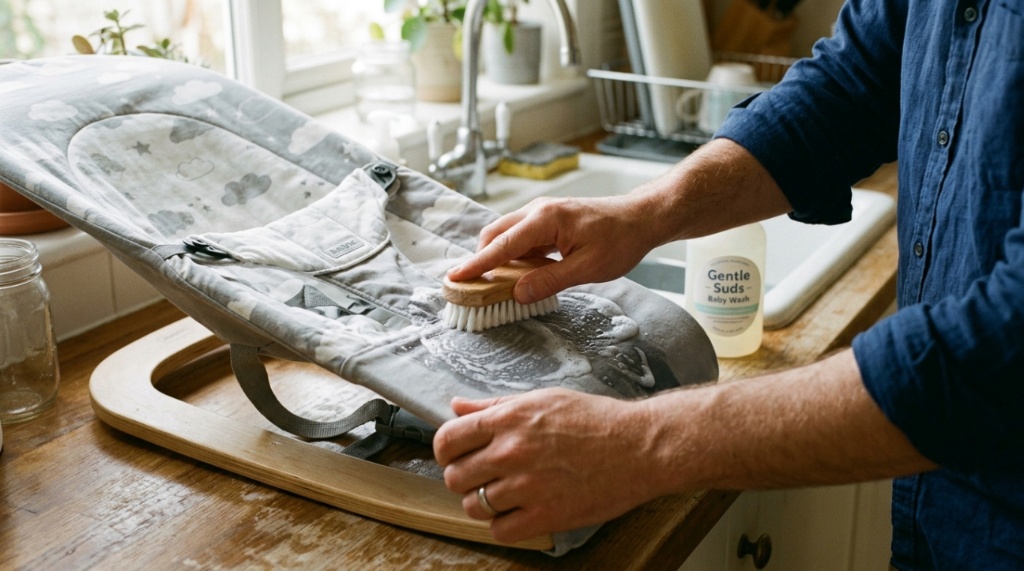
The fabric pad and the safety straps are the areas that come into contact with your baby’s skin, saliva, and spilled milk. These need the most frequent attention. Before you begin, remove all detachable parts, including the toy bar, the pad, and the seat cover, if fully removable. Check the care label first. Most bouncer pads are machine-washable, but some inserts might need a gentler hand wash.
Machine Washing Your Bouncer Pad
Place the fabric pad and straps in a mesh laundry bag to protect them from snagging. Use a gentle cycle with cold or lukewarm water and a mild, fragrance-free detergent. Avoid bleach or fabric softeners as these can break down the fibers and irritate your baby’s sensitive skin. Once the cycle is complete, immediately remove the items from the machine. Do not let them sit in the washer, as that damp environment is a breeding ground for mildew.
The Critical Drying Process
This is where Florida residents often go wrong. Skip the dryer if the tag says air-dry only; high heat can warp the plastic backing on some pads. Instead, lay the pad flat on a clean, dry towel. Roll the towel and pad up together to press out excess moisture. Then, hang the pad outside in direct sunlight for a few hours. If you don’t have outdoor space, place it in front of a dehumidifier or a strong fan. Avoid leaving it in the laundry room, which is typically the most humid place in the house, To complete your routine of protecting your child’s skin and gear from regional climate challenges, check out our guide to find the safest baby lotion in California.
How to Disinfect the Plastic Frame Safely
The plastic frame of the bouncer doesn’t get as dirty as the fabric, but it collects dust, crumbs, and airborne mildew spores. Cleaning the frame is simpler but requires the right approach to avoid damaging the material or leaving toxic residues. You only need a microfibre cloth and a simple cleaning solution.
Choosing the Right Cleaning Solution
Mix equal parts white vinegar and water in a spray bottle. Vinegar is a natural disinfectant that kills about 82% of mold species and is completely safe for babies when dried. Spray the solution onto the cloth—never directly onto the bouncer to avoid overspray into crevices—and wipe down the entire frame, including the base and the undercarriage. Follow up with a dry cloth to remove excess moisture. This step is vital in Florida, as leaving the plastic wet will only attract more dust and harbor bacteria.
Dealing with Stubborn Spots
If you see black spotting on the plastic frame or fabric webbing, that is likely mildew. For tough spots on plastic, use a soft-bristled brush (like an old toothbrush) dipped in the vinegar solution to gently scrub the area. For the fabric webbing on the frame, a paste of baking soda and water works well. Apply the paste, let it sit for 15 minutes, and rinse with a damp cloth. Again, ensure the area is dried thoroughly afterward.
Why Sunlight is Your Best Ally
Florida has one distinct advantage when it comes to cleaning baby gear: the constant sunshine. UV rays are a powerful, chemical-free disinfectant. Once you have washed the fabric and cleaned the plastic, placing the bouncer outside for a few hours is the most effective way to ensure any lingering mold spores or bacteria are neutralized. However, be cautious of leaving plastic parts in direct sun for too long during the peak summer months, as it can cause yellowing or cracking. An hour of morning sun is perfect—it’s strong enough to kill microbes but not harsh enough to damage the plastic. If you have to clean the bouncer during the rainy season, bring it back inside and rely on a dehumidifier set to 50% relative humidity in the room where the bouncer is drying.
Quick Maintenance Routine for Busy Parents
Deep cleaning a bouncer takes time, but daily maintenance doesn’t have to be a chore. To avoid the cycle of grime buildup, start following a simple “wipe-it-down” strategy each evening. Wipe down the frame with a baby-safe wipe or a damp cloth to remove dust and dried drool. Shake out the pad to remove crumbs. Once a week, vacuum the fabric pad with a brush attachment to remove allergens that have accumulated. By doing this, instead of being a once-a-month ordeal, your deep cleaning sessions will be a breeze. This is especially crucial during Florida’s summer months when sweat and humidity mix, creating a sticky film on the seat.
Overlooked Areas Most Parents Miss
During a routine cleaning, many people forget to clean under the leg straps or behind the toy bar connection points. These small crevices are notorious for trapping moisture because they are not exposed to air circulation.
- Leg strap buckles: Use a cotton swab dipped in rubbing alcohol to clean the slots where the strap feeds through. This removes dirt and kills bacteria without soaking the area.
- Toy bar clips: These often have small holes and grooves. Wipe them with a dry cloth after a deep clean to prevent water from pooling.
- The base gliders: If your bouncer has rockers, check the bottom for dust bunnies. A vacuum attachment works well here.
Frequently Asked Questions
Can I use bleach to clean mold off my baby bouncer?
It’s best to avoid bleach. Bleach is harsh, leaves a toxic residue, and can damage the fabric’s fibers. White vinegar or a specialized baby-safe disinfectant is safer and works just as well on mold in most cases.
How often should I deep clean the bouncer?
In Florida’s humid climate, aim for a deep clean every two weeks. If you notice a musty smell or visible spots, clean it sooner. The weekly quick wipe-down routine between those deep cleans is essential.
Is it safe to put the bouncer pad in the dryer?
Only if the manufacturer’s label explicitly says dryer-safe. Many pads have a plastic coating that can melt or warp, creating a safety hazard. Air-drying in the sun is the safer option and helps sanitize the fabric.
What is the best way to remove a mildew smell from the seats?
Soak the fabric in a bathtub with a cup of baking soda and a cup of white vinegar for an hour before washing. The vinegar neutralizes odors, and the baking soda lifts the spores. After washing, be sure to dry it in direct sunlight.
Can I just use baby wipes to clean the whole bouncer?
Baby wipes are fine for quick cleanups of the plastic frame and light drool on the fabric, but they don’t sanitize deeply or kill mold spores. You’ll need a proper wash and disinfecting routine for thorough cleaning.
Conclusion
Cleaning a baby bouncer in Florida is less about scrubbing hard and more about managing moisture effectively. By focusing on rapid drying, using UV light to your advantage, and targeting the hidden spaces where mildew loves to hide, you can keep your baby’s bouncer hygienic and fresh without resorting to harsh chemicals. Start with a solid weekly wipe-down and stick to the bi-weekly deep wash. This routine will prevent the humid climate from winning and ensure a clean, safe, and cheerful spot for your little one to relax and play. Always remember that when the air is heavy with moisture, a final direct-sunlight session is the best finishing move for any cleaning job on baby gear.