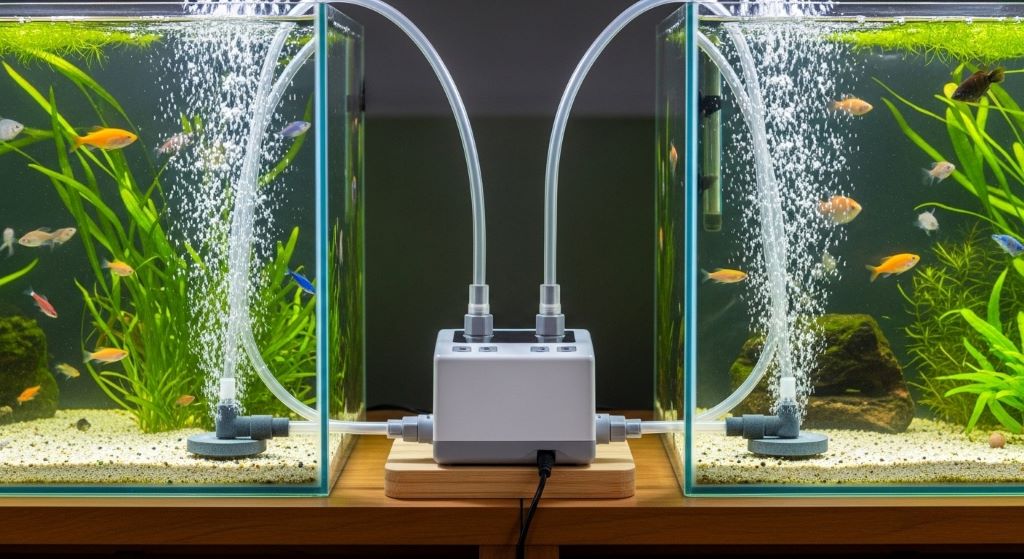
Setting up multiple aquariums can be both exciting and challenging for fish enthusiasts. One common question that arises is whether to invest in separate air pumps or use a single unit with multiple outlets. A dual outlet air pump offers an efficient solution for maintaining proper aeration in two tanks simultaneously. This comprehensive guide will walk you through everything you need to know about using a dual outlet aquarium air pump effectively.
Understanding Dual Outlet Air Pumps
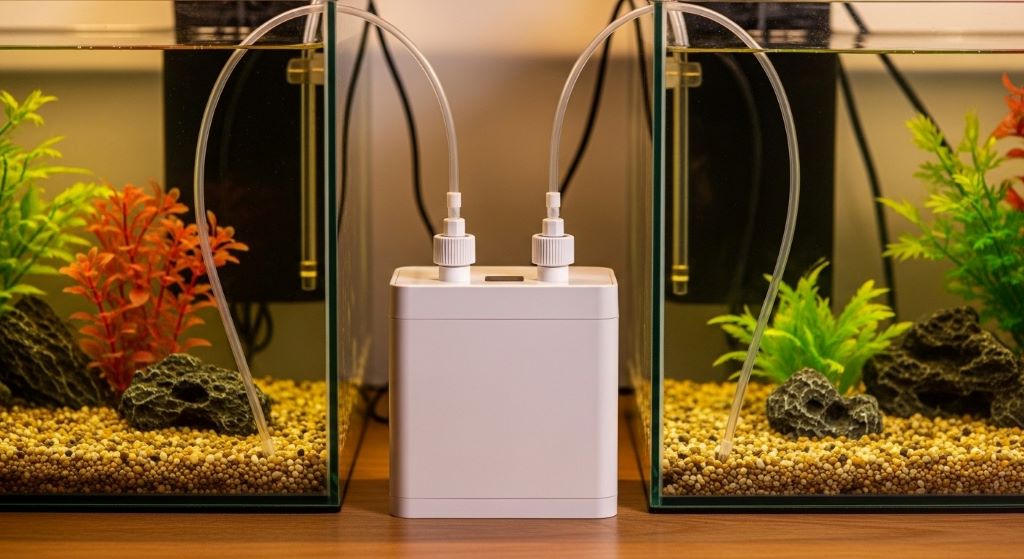
A dual outlet air pump is designed with two separate air outlets, allowing you to connect air lines to two different aquariums or multiple devices within the same tank. These pumps eliminate the need for purchasing separate units for each aquarium, making them a cost-effective choice for hobbyists managing multiple setups.
The mechanism is straightforward. The pump draws in air and pushes it through two independent outlets. Each outlet can be adjusted to control the airflow, ensuring both tanks receive adequate oxygenation based on their specific needs. This flexibility makes dual outlet pumps ideal for various aquarium sizes and stocking levels.
Benefits of Using a Two Outlet Air Pump
Space conservation stands out as one of the primary advantages. Instead of cluttering your aquarium area with multiple pumps, you can maintain a cleaner setup with just one device. This becomes particularly valuable if you have limited space around your tanks.
Energy efficiency represents another significant benefit. Running one pump consumes less electricity than operating two separate units. Over time, this translates to noticeable savings on your energy bills. Additionally, the 2 outlet air pump benefits extend to reduced noise levels, as you only have one motor humming instead of two.
Cost savings make dual outlet pumps attractive to budget-conscious aquarists. While the initial investment might be slightly higher than a single-outlet pump, it remains considerably cheaper than purchasing two separate devices. Furthermore, maintenance becomes simpler when you only need to clean and replace parts for one unit.
The convenience factor cannot be overlooked. Managing one power cord and one device simplifies your aquarium setup. You can position the pump centrally between your tanks, minimizing the length of airline tubing required and reducing visual clutter.
Planning Your Multiple Tank Setup
Before connecting your dual outlet pump, careful planning ensures optimal performance. First, assess the size of both aquariums and their stocking levels. Heavily stocked tanks require more aeration than lightly populated ones. Similarly, tanks with live plants producing oxygen during daylight hours may need less supplemental aeration than non-planted setups.
Consider the distance between your tanks and where you will place the pump. Ideally, position the pump above water level to prevent backflow. If this arrangement is not possible, install check valves on each airline to protect your pump from water damage. Check valves are inexpensive safety devices that allow air to flow in only one direction.
Evaluate whether both tanks have similar aeration needs. A multiple tank setup works best when both aquariums require comparable airflow. If one tank needs significantly more aeration, you might need to adjust valve settings or consider alternative solutions.
Think about future expansion plans. If you anticipate adding more tanks, you might want to explore pumps with additional outlets or plan how to incorporate air splitters into your system later.
Setting Up Your Dual Outlet Pump
Installation begins with choosing the right location. Place the pump on a stable surface above the water line of both tanks. This positioning prevents water from siphoning back into the pump during power outages. If mounting above water level is impossible, installing check valves becomes essential.
Connect airline tubing to each outlet. Cut the tubing to appropriate lengths, leaving some slack to prevent tension. Excessively long tubing can reduce airflow efficiency, so aim for the shortest practical distance while maintaining flexibility for maintenance.
Attach check valves to each airline near the pump outlets. These valves ensure that if power fails, water cannot flow backward and damage the pump. Orient the valves correctly, as they only work when installed in the proper direction. Most check valves have arrows indicating the correct airflow direction.
Run the airline tubing to each tank. Secure the tubing along the way to prevent kinks or tangles. You can use adhesive clips or hooks designed for aquarium use. Connect the tubing to air stones, bubble walls, or other aeration devices in your tanks.
Adjusting Airflow for Each Tank
Most dual outlet pumps feature individual flow control valves for each outlet. These valves allow you to fine-tune the amount of air going to each tank. Start by opening both valves fully and observing the bubble output in each aquarium.
If one tank receives too much aeration, gradually close its valve until the bubbling reaches the desired level. The goal is creating a gentle, steady stream of bubbles that circulates water effectively without creating excessive turbulence. Fish should be able to swim comfortably without fighting strong currents.
Monitor both tanks over several days. Watch for signs of inadequate oxygenation, such as fish gasping at the surface or congregating near the filter output. These behaviors indicate a need for increased airflow. Conversely, if decorations are being displaced or substrate is being disturbed excessively, reduce the airflow.
Different fish species have varying oxygen requirements. Research the specific needs of your aquatic inhabitants to determine appropriate aeration levels. Tropical fish in warmer water generally need more oxygen than coldwater species because warm water holds less dissolved oxygen.
Air Splitter vs Dual Pump Considerations
When expanding your aquarium collection, you face a choice between using an air splitter with a single-outlet pump or investing in a dedicated dual outlet unit. Each approach has distinct advantages and limitations worth understanding.
An air splitter is a simple device that divides one airstream into multiple outlets. These plastic or brass fittings cost just a few dollars and can turn any single-outlet pump into a multi-tank solution. However, splitters divide the available airflow, potentially reducing the power reaching each tank. This works well for small tanks or when aeration demands are modest.
Dual outlet pumps are specifically engineered to power two separate airlines at full strength. Each outlet receives adequate pressure to operate efficiently. This makes them superior for larger tanks or heavily stocked aquariums that demand robust aeration. The air splitter vs dual pump debate often comes down to your specific requirements and budget.
Consider your total aeration needs. If you have two small tanks housing peaceful community fish, a splitter might suffice. However, for larger tanks, breeding setups, or heavily stocked systems, a purpose-built dual outlet pump delivers better performance and reliability.
Maintaining Your Dual Outlet Air Pump
Regular maintenance ensures your pump operates efficiently and lasts for years. Monthly cleaning should include wiping down the pump exterior to remove dust and debris. Check that air intakes are clear and unobstructed, as blocked intakes force the pump to work harder and reduce its lifespan.
Every three to six months, inspect the airline tubing for wear, discoloration, or algae growth. Replace any tubing that appears brittle or damaged. Check valves should also be inspected and replaced annually, as they can fail over time and lose effectiveness.
The pump’s internal filter or air intake sponge requires regular attention. Many pumps include replaceable filters that trap dust and particles before they enter the pump mechanism. Clean or replace these filters according to the manufacturer’s recommendations, typically every one to three months depending on environmental conditions.
Listen for changes in pump sound. A normally quiet pump that suddenly becomes loud may have a worn diaphragm or other internal component needing replacement. Most manufacturers sell repair kits that include diaphragms, rubber parts, and gaskets. These kits are affordable and extend your pump’s life significantly.
Troubleshooting Common Issues
Weak airflow in one or both tanks is a frequent problem. First, check that the pump is receiving power and the outlet valves are open. Examine airline tubing for kinks, pinches, or blockages. If air stones have become clogged with debris, clean or replace them to restore proper airflow.
Uneven airflow between tanks can occur even with adjustment valves. This might indicate that one airline has greater resistance, possibly from a longer tubing run or a partially clogged air stone. Try equalizing the tubing lengths or replacing air diffusers to balance the system.
Excessive noise usually stems from vibration or worn internal components. Place the pump on a foam pad to reduce vibration noise. If the pump itself sounds louder than normal, internal parts may need replacement. Consult your owner’s manual for guidance on rebuilding the pump.
Water backup into the airline indicates a failed check valve or improper pump positioning. Immediately disconnect the affected airline and clear any water. Replace the check valve and ensure the pump sits above the water line going forward.
Advanced Configuration Options
Once you master basic dual pump operation, several advanced configurations can enhance your setup. Using gang valves gives you precise control over airflow distribution to multiple devices. A gang valve is essentially a multi-port splitter with individual adjustment for each outlet.
You can combine a dual outlet pump with splitters to run four or more devices across your two tanks. For example, each pump outlet could connect to a splitter, giving you two air stones per tank. This arrangement works well when individual devices need minimal airflow but you want coverage in multiple tank areas.
Sponge filters are popular accessories for dual outlet pumps. These filters provide both mechanical filtration and aeration, making them ideal for breeding tanks, quarantine setups, or tanks housing delicate fry. Running sponge filters on both outlets creates gentle, effective filtration in two tanks simultaneously.
Bubble walls and ornaments can be powered by dual outlet pumps for decorative purposes. These features add visual interest while providing beneficial water circulation. Just ensure the pump has sufficient power to operate decorative elements, which sometimes require more pressure than standard air stones.
Choosing the Right Pump Size
Pump capacity is measured in gallons per hour or liters per hour of air output. As a general guideline, select a pump that can process the total volume of both tanks at least once per hour. For example, if you have a 20-gallon tank and a 30-gallon tank, choose a pump rated for at least 50 gallons per hour.
However, this is a minimum recommendation. Heavily stocked tanks, tanks with minimal surface agitation, or aquariums in warm environments benefit from higher turnover rates. Consider a pump rated for 1.5 to 2 times your combined tank volume for optimal oxygenation.
Tank depth also influences pump selection. Deeper tanks require more powerful pumps because air pressure increases with depth. A pump suitable for shallow tanks might struggle to push bubbles through deep water columns. Check manufacturer specifications for maximum depth ratings.
Noise level matters, especially if your aquariums are in living spaces or bedrooms. Read reviews and compare decibel ratings when possible. Some premium pumps feature noise-dampening technology that justifies their higher price through quieter operation.
Energy Efficiency and Operating Costs
Modern dual outlet air pumps are remarkably energy-efficient, typically consuming between 3 and 15 watts depending on size and output. To calculate annual operating costs, multiply the wattage by 24 hours, then by 365 days, and divide by 1000 to get kilowatt-hours. Multiply this by your local electricity rate.
For instance, a 5-watt pump running continuously uses approximately 44 kilowatt-hours annually. At an average rate of 13 cents per kilowatt-hour, this costs about $5.70 per year. This modest expense makes continuous operation practical and affordable for most aquarists.
Comparing this to running two separate single-outlet pumps reveals the efficiency advantage. Two 4-watt pumps would consume 70 kilowatt-hours yearly, costing around $9.10. Therefore, choosing one dual outlet pump over two single units saves approximately $3.40 annually while reducing equipment clutter.
Timer usage is generally not recommended for air pumps. Fish depend on consistent oxygenation, and interrupting aeration can stress livestock or even cause fatalities in heavily stocked tanks. The minimal energy savings from running pumps part-time do not justify the risk to your aquatic pets.
Safety Considerations
Electrical safety is paramount when operating aquarium equipment. Always plug your air pump into a ground fault circuit interrupter outlet, which cuts power if it detects electrical leakage. This protection is crucial in environments where water and electricity coexist.
Create a drip loop with the power cord to prevent water from traveling along the cord toward the outlet. A drip loop is simply a downward arc in the cord below the outlet level. Any water running down the cord will drip off at the lowest point rather than reaching the electrical connection.
Keep the pump dry at all times. Even small amounts of moisture can damage internal components or create electrical hazards. If water does enter the pump, unplug it immediately and allow it to dry completely for at least 48 hours before attempting to restart.
Supervise initial setup carefully. Watch both tanks for the first few hours after starting your dual outlet pump. Confirm that airflow is adequate, connections are secure, and no leaks exist in the airline system. This early monitoring prevents problems before they affect your fish.
Conclusion
Using a dual outlet aquarium air pump for two tanks offers numerous advantages including cost savings, space efficiency, and simplified maintenance. The 2 outlet air pump benefits make it an excellent choice for aquarists managing multiple aquariums. Whether you are comparing an air splitter vs dual pump or planning a new multiple tank setup, understanding proper installation, adjustment, and maintenance ensures success.
By following the guidelines in this article, you can create a reliable aeration system that keeps your aquatic inhabitants healthy and thriving. Remember to choose a pump sized appropriately for your combined tank volume, maintain it regularly, and monitor your fish for signs of adequate oxygenation. With proper setup and care, a dual outlet air pump provides years of dependable service across multiple aquariums.
Frequently Asked Questions
Can I use a dual outlet air pump for tanks of different sizes?
Yes, dual outlet pumps work well with different sized tanks. Use the individual flow control valves to adjust airflow for each tank based on its specific size and stocking level. Smaller tanks typically need less aeration than larger ones.
How often should I replace the air stones in my tanks?
Air stones should be replaced every three to six months, depending on water quality and mineral content. When stones become clogged and produce larger bubbles or reduced airflow, it is time for replacement.
Is it necessary to run an air pump 24 hours a day?
For most aquariums, continuous operation is recommended. Fish need consistent oxygen levels, and interrupting aeration can cause stress. The exception might be heavily planted tanks that produce excess oxygen during daylight hours.
What is the difference between check valves and flow control valves?
Check valves prevent water backflow into the pump during power outages, while flow control valves adjust the amount of air passing through each airline. Both serve different purposes and are often used together in dual outlet setups.
Can a dual outlet pump power devices other than air stones?
Absolutely. Dual outlet pumps can power sponge filters, bubble walls, decorative ornaments, undergravel filters, and protein skimmers. Just ensure the pump has adequate power for your chosen accessories.
Related Topics:
What to Look for in a Property When you are a First Time Buyer
The Cost of Ignoring Minor Plumbing Issues