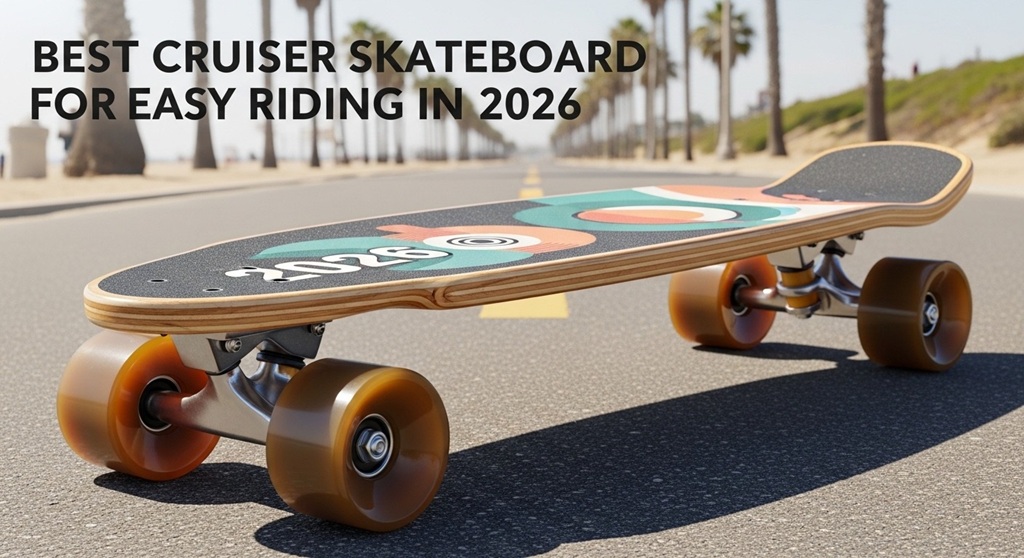
A cruiser skateboard is a compact board designed for smooth, stable riding over streets and sidewalks. It uses soft wheels, flexible decks, and responsive trucks to make commuting and casual cruising easier than traditional skateboards.
You don’t need tricks to enjoy skateboarding. You need comfort, control, and confidence.
That’s where a cruiser skateboard comes in. Unlike street decks built for technical tricks, cruisers focus on transportation and relaxed riding. They are designed to absorb road vibration, roll over cracks, and handle city terrain without constant foot pushing.
In 2026, more adults and students are choosing cruiser boards as a commuter skateboard option. According to recent industry reports from market research firms tracking personal mobility products, the global skateboard market continues steady growth due to urban commuting trends and micro-mobility adoption. Riders are looking for practical alternatives for short-distance travel.
If your goal is easy riding, short commutes, or campus transportation, a cruiser with smooth wheels skateboard setup and compact design can be the right fit. In this guide, you’ll learn exactly how to choose the best model based on deck size, wheels, trucks, bearings, and real-world use cases.
Why Do Most Riders Struggle to Pick the Right Cruiser Skateboard?
Quick Answer: Most riders choose based on looks instead of wheel hardness, deck length, or truck quality. This leads to uncomfortable rides and poor stability.
Problem: Many beginners assume all skateboards ride the same. They don’t. A trick board with hard wheels will feel rough on asphalt. A longboard might feel too large for daily transport.
Agitation: Choose wrong, and you’ll feel every crack in the sidewalk. You’ll push harder. You’ll lose speed. You may even stop riding altogether.
Solution: Focus on riding purpose first. Ask yourself:
- Will you ride on rough pavement?
- Do you need something easy to carry?
- Are you commuting daily?
- Do you prioritize speed or portability?
Your answers will guide every choice below.
What Deck Size Is Best for a Cruiser Skateboard?
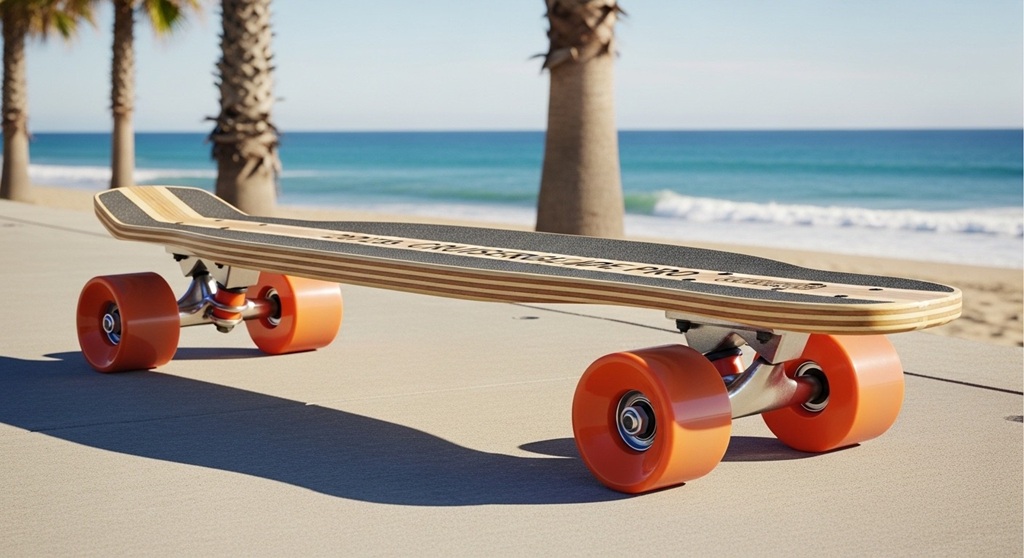
Quick Answer: For easy riding and commuting, choose a deck between 28” and 32” long and 7.5” to 9” wide.
How Does Deck Length Affect Stability?
Shorter decks (27”–29”) are more portable. They fit inside backpacks and lockers. However, they can feel less stable at higher speeds.
Longer cruisers (30”–32”) provide better balance. They distribute weight evenly and feel smoother on downhill sections.
How Does Deck Width Affect Comfort?
Wider decks (8.5”–9”) provide more foot space. This improves control for beginners. Narrow decks (7.5”–8”) are lighter and easier to maneuver.
If you want a portable skateboard for daily travel, a 28–30 inch deck offers a good balance between comfort and convenience.
For complete beginner-friendly options, you can explore curated lists like
best affordable beginner skateboards, especially if budget matters.
Why Are Smooth Wheels Critical for Easy Riding?
Quick Answer: Choose soft wheels (78A–87A) with larger diameters (55mm–65mm) for smoother rides over rough surfaces.
Wheel hardness is measured on the durometer scale. Lower numbers mean softer wheels.
| Wheel Type | Durometer | Bst For |
|---|---|---|
| Soft Cruiser Wheels | 78A–87A | Rough roads, commuting |
| Hybrid Wheels | 88A–95A | Mixed terrain |
| Hard Street Wheels | 96A–101A | Skate parks, tricks |
A smooth wheels skateboard setup absorbs vibration. It rolls over cracks without sudden stops. Research from materials engineering studies confirms that softer polyurethane compounds reduce shock transfer compared to harder wheels.
Wheel diameter also matters:
- 55mm–58mm: Lightweight, quick acceleration
- 60mm–65mm: Better speed retention and smoother glide
If comfort is your priority, go larger and softer.
What Trucks Should You Choose for Stability and Control?
Quick Answer: Choose aluminum trucks with medium bushings for balanced turning and stability.
Trucks connect wheels to the deck. Weak trucks cause wobbling. Quality trucks provide predictable turns.
Truck Width
The axle width should match deck width. Misaligned trucks affect control.
Bushings
Bushings control turning resistance.
- Soft bushings: Easier turning
- Hard bushings: More stable at speed
For commuting, medium bushings offer a balance between maneuverability and safety.
Are Bearings Important for a Cruiser Skateboard?
Quick Answer: Yes. ABEC-5 or ABEC-7 bearings are sufficient for smooth, reliable commuting rides.
Bearings determine how freely wheels spin. Higher ABEC ratings indicate tighter manufacturing tolerance, but real-world performance depends more on lubrication and maintenance.
Most commuter riders do not need premium racing bearings. Proper cleaning extends lifespan more than rating alone.
Should You Choose a Plastic Cruiser or Wooden Deck?
Quick Answer: Wooden decks offer better stability. Plastic decks are lighter and more weather-resistant.
Wooden Deck (Maple or Bamboo)
- Better grip
- More stable
- Traditional feel
Plastic Cruiser
- Lightweight
- Resistant to moisture
- Easy to carry
If you ride daily, wooden decks provide better long-term durability.
How Portable Should a Cruiser Skateboard Be for Commuting?
Quick Answer: If you carry it daily, choose under 30 inches and under 6 pounds.
Urban commuters prioritize portability. Students often carry boards into classrooms. Office workers store them under desks.
A lightweight portable skateboard reduces fatigue and improves convenience. However, do not sacrifice wheel quality for size alone.
What Real-World Data Supports Cruiser Skateboards for Commuting?
Quick Answer: Case studies from urban mobility research show micro-mobility tools reduce short-distance car trips.
Transportation studies in multiple cities indicate that trips under 3 miles account for a high percentage of urban car use. Personal mobility devices like skateboards and scooters reduce congestion and fuel consumption.
Riders report time savings during peak traffic hours. A commuter skateboard eliminates parking delays and short-distance fuel costs.
For riders starting on a budget, beginner-friendly boards recommended in this guide on
best affordable beginner skateboards offer accessible entry points.
How Much Should You Spend on a Quality Cruiser Skateboard in 2026?
Quick Answer: Expect to spend $80–$180 for a reliable cruiser skateboard.
Lower-priced boards under $60 often compromise truck quality and wheel durability. Mid-range boards typically offer better components and longer lifespan.
Investing slightly more upfront reduces replacement costs later.
How Do You Test If a Cruiser Skateboard Is Right for You?
Quick Answer: Check balance, push comfort, turning response, and vibration absorption.
- Stand with both feet flat.
- Push gently and observe glide distance.
- Turn slowly and test stability.
- Ride over textured pavement.
If the board feels stable and smooth, you made the right choice.
Conclusion: What Is the Best Cruiser Skateboard for Easy Riding in 2026?
A cruiser skateboard built for easy riding focuses on comfort, smooth wheels, proper deck size, and stable trucks. Avoid choosing based only on graphics. Focus on wheel softness, deck balance, and commuting needs.
Urban travel is changing. Short-distance transportation demands practical solutions. A well-chosen commuter skateboard offers independence, efficiency, and fun without fuel costs or parking stress.
If you’re ready to start, explore trusted beginner options and compare features carefully. Make your choice based on riding purpose, not trend.
Take action today. Review specifications. Choose a smooth setup. Start riding smarter in 2026.
Frequently Asked Questions (FAQs)
Is a cruiser skateboard good for beginners?
Yes. Cruiser skateboards are stable and easier to control than trick boards. Soft wheels improve balance and comfort.
Can I use a cruiser skateboard for daily commuting?
Yes. Many riders use them for trips under 3 miles. They are practical for short urban travel.
What wheel hardness is best for smooth riding?
Wheels between 78A and 87A provide maximum shock absorption and smoother performance on rough roads.
Is a cruiser skateboard better than a longboard?
Cruisers are more portable. Longboards offer more stability at high speeds. For commuting and carrying convenience, cruisers are often preferred.
How long does a cruiser skateboard last?
With proper maintenance, quality boards last several years. Wheel and bearing replacement may be needed depending on usage.
Do I need safety gear when riding a cruiser skateboard?
Yes. Helmets and protective pads reduce injury risk, especially for beginners.
Related Topic: How to Set Up Your Home Workshop with the Right Saw
Read Next: Throughout Covid and Into The New Normal