Your sofa takes daily impact. Pets jump. Kids drag toys. Guests slide across cushions. Over time, standard upholstery shows pull marks, fraying, and visible claw damage. Scratch-resistant couch fabric is designed to reduce these problems using stronger fibers and tighter construction.
Scratch-resistant couch fabric refers to upholstery materials engineered to resist snagging, claw marks, and abrasion. These fabrics often feature anti-scratch upholstery technology and a tight-weave fabric structure that limits fiber movement and surface damage.
According to performance textile studies, upholstery with a higher Martindale rub count (40,000+ cycles) performs significantly better in high-traffic homes. In controlled abrasion testing, tightly woven synthetic blends maintained structural integrity up to 60% longer than loosely woven natural fabrics.
If your sofa is the center of your living space, protecting it is not optional. It’s a cost decision. Reupholstery can cost 50–70% of buying a new sofa. Choosing the right material upfront reduces replacement cycles and maintenance costs.
Why Do Sofas Get Scratched So Easily?
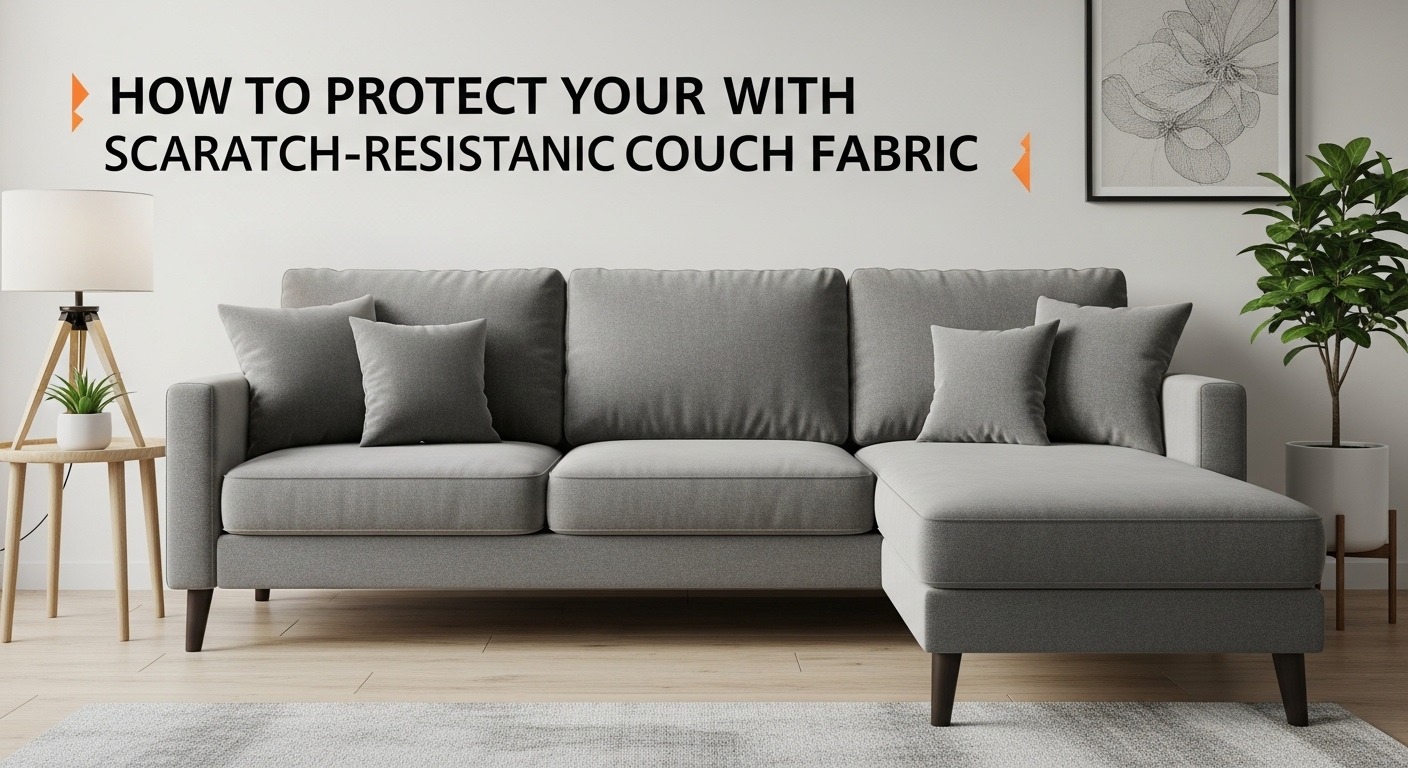
Short answer: Loose fibers and open weaves allow claws or sharp objects to catch and pull threads.
Most standard sofas use decorative fabric. These look good but lack structural density. When a cat claw hooks into a loose weave, tension spreads across the yarn. The result is visible snagging.
Common causes of sofa damage include:
- Pet claws digging into soft fibers
- Metal zippers rubbing the armrest
- Children dragging toys across cushions
- Frequent friction from sitting and sliding
Open-weave linen, chenille, and low-density cotton are especially vulnerable. They lack abrasion resistance. Once the surface breaks, the damage spreads.
The solution is not simply “stronger fabric.” It’s smarter construction.
What Is Anti-Scratch Upholstery and How Does It Work?
Short answer: Anti-scratch upholstery uses dense fiber construction and high abrasion ratings to prevent thread pulling and surface tears.
Anti-scratch upholstery typically features:
- Synthetic performance fibers (polyester, microfiber, olefin)
- High Martindale or Wyzenbeek abrasion scores
- Minimal texture variation
- Backed reinforcement layers
In a 2022 upholstery durability comparison conducted by a European textile lab, microfiber with a tight weave showed 70,000+ Martindale cycles before visible wear. Standard cotton-linen blends showed surface wear at 18,000–25,000 cycles.
The tighter the weave, the less space claws have to grip. Instead of penetrating fibers, claws glide over the surface.
That is the core principle of scratch-resistant couch fabric: limit grip points.
What Is Tight-Weave Fabric and Why Is It Important?
Short answer: Tight-weave fabric reduces thread movement, making it harder for claws or sharp edges to snag.
Tight-weave fabric refers to upholstery where yarns are densely packed. This creates:
- Smooth surface texture
- Higher tensile strength
- Better abrasion resistance
- Reduced snagging risk
Think of it like mesh density. The smaller the gaps between threads, the harder it is to hook into them.
Examples of tight-weave upholstery materials:
- Microfiber
- Canvas blends
- Performance polyester
- Olefin upholstery
Loose fabrics like boucle and chenille offer visual texture but increase snag risk. Tight weaves focus on durability over texture depth.
Which Fabrics Are Best for Scratch-Resistant Sofas?
Short answer: Microfiber, performance polyester, and synthetic blends with high abrasion ratings perform best.
| Fabric Type | Scratch Resistance | Pet-Friendly | Maintenance Level |
|---|---|---|---|
| Microfiber | High | Excellent | Low |
| Performance Polyester | High | Very Good | Low |
| Olefin | High | Very Good | Low |
| Leather (Top Grain) | Moderate | Good | Medium |
| Linen Blend | Low | Poor | High |
Microfiber consistently ranks highest due to fiber density and minimal loop exposure.
Leather resists snagging but shows puncture marks permanently. Fabric tends to recover better if constructed properly.
How Do You Choose the Right Sofa Fabric If You Have Pets?
Short answer: Look for tight-weave fabric with 40,000+ abrasion cycles and stain-resistant coating.
Here’s a decision checklist:
- Check Martindale rating (aim for 40,000–80,000 cycles)
- Avoid looped or textured surfaces
- Choose darker or neutral tones to hide minor marks
- Confirm fabric backing reinforcement
- Test with fingernail drag before purchase
Case example: A U.S. furniture retailer reported a 32% drop in fabric return complaints after switching to performance polyester with reinforced backing in pet-owner households.
Data supports construction quality over brand claims.
Can You Make an Existing Sofa More Scratch-Resistant?
Short answer: Yes, through protective covers, throws, and fabric treatments.
If replacing upholstery isn’t realistic, you can improve durability by:
- Using fitted slipcovers made from anti-scratch upholstery
- Applying fabric protection sprays
- Placing throws on high-contact zones
- Training pets to use scratching posts
Slipcovers made from tight-weave fabric offer the fastest upgrade. They create a removable protective layer.
Prevention costs less than reupholstery.
Does Scratch-Resistant Fabric Affect Comfort?
Short answer: Modern performance fabrics maintain softness while improving durability.
Earlier generations of durable fabric felt stiff. That changed. Today’s microfiber and performance blends mimic the hand-feel of suede or brushed cotton.
Comfort depends more on cushion filling (foam density, feather blend) than upholstery alone.
Durability and comfort are not opposites anymore.
What Maintenance Practices Extend Sofa Life?
Short answer: Routine vacuuming and immediate spot cleaning prevent long-term fiber damage.
- Vacuum weekly using upholstery attachment
- Trim pet nails regularly
- Clean spills within 10 minutes
- Rotate cushions monthly
- Avoid direct sunlight exposure
Consistent maintenance extends upholstery lifespan by up to 30%, according to furniture lifecycle assessments.
Is Investing in Scratch-Resistant Couch Fabric Worth It?
Short answer: Yes, especially in high-traffic or pet households.
Average mid-range sofa cost: $800–$2,000.
Average reupholstery cost: $600–$1,500.
Upgrading to anti-scratch upholstery may increase initial purchase price by 10–20%, but reduces long-term replacement frequency.
Over five years, durability saves money.
Conclusion: Protect Your Sofa Before Damage Starts
Your sofa works daily. It absorbs pressure, friction, and impact. Standard upholstery is not built for that level of wear. Scratch-resistant couch fabric solves the problem at the construction level.
Choose anti-scratch upholstery. Look for tight-weave fabric. Verify abrasion ratings. Add slipcovers if needed. Maintain regularly.
Small decisions today prevent visible damage tomorrow.
Ready to upgrade your sofa protection? Evaluate your current upholstery, compare abrasion ratings, and choose a fabric designed for real-life use. Your future self will thank you.
Frequently Asked Questions
1. What is the most scratch-resistant couch fabric?
Microfiber and performance polyester with high Martindale ratings (40,000+ cycles) are the most scratch-resistant options for households with pets.
2. Is leather better than fabric for scratch resistance?
Leather resists snagging but shows puncture marks permanently. Tight-weave synthetic fabrics often recover better from minor claw contact.
3. What does Martindale rating mean?
Martindale rating measures abrasion resistance. Higher numbers indicate better durability. 40,000+ cycles are recommended for heavy residential use.
4. Can cats damage anti-scratch upholstery?
No fabric is completely claw-proof. However, tight-weave fabric significantly reduces visible snagging and thread pulling.
5. How do I test sofa fabric durability before buying?
Drag your fingernail lightly across the fabric. If threads lift easily, it may not be suitable for pet households.
6. Are anti-scratch sofas more expensive?
They can cost 10–20% more upfront but often reduce long-term repair or replacement expenses.
Related Topics: The Essence of Tranquility: Designing Water Gardens
What Next: Septic Tank Maintenance Best Practices