Fishing is one of the most rewarding hobbies in the world. However, for people who travel often, carrying bulky or expensive gear can feel like a real challenge. The good news is that you do not have to spend a fortune to enjoy great fishing on the go. With smart choices and a little research, you can find the right tools without breaking the bank. This guide will help you navigate the world of affordable angling equipment so you can fish anywhere you travel.
Why Travel-Friendly Fishing Gear Matters
Frequent travelers face a unique problem. They want to fish wherever they go, but they also need gear that is light, compact, and easy to pack. Additionally, they need equipment that fits a reasonable budget, since travel itself already comes with many costs.
Choosing the wrong gear can mean extra baggage fees, broken rods, or simply too much to carry. Therefore, knowing what to prioritize before you buy makes all the difference. Travel-friendly fishing gear is designed with portability in mind. It is built to handle different environments, from mountain streams to coastal beaches.
Understanding What You Actually Need
Before you buy anything, think clearly about where you plan to fish. Do you mostly target freshwater fish like bass or trout? Or do you prefer saltwater species near the coast? The type of fishing you do will shape every gear choice you make.
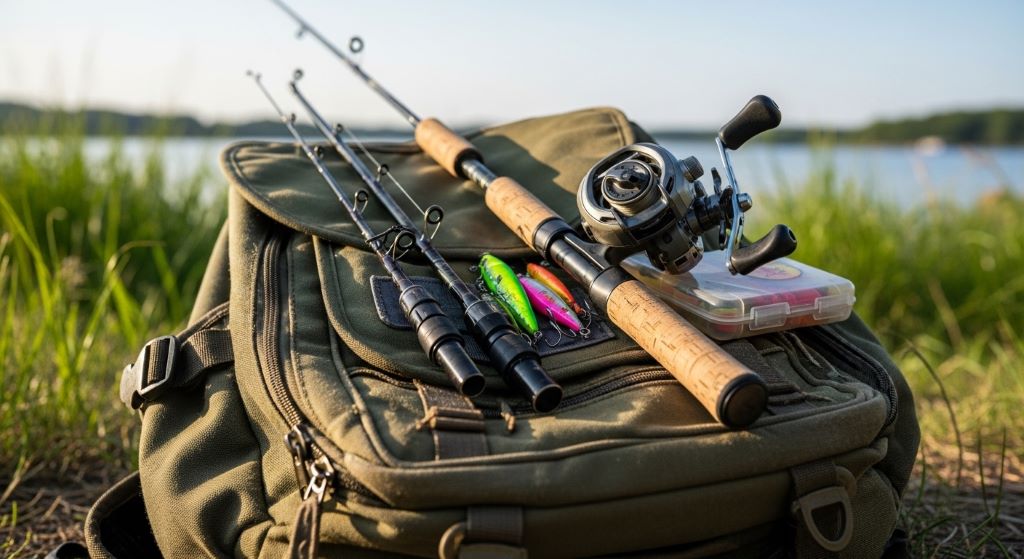
For most traveling anglers, a simple setup works best. You do not need a dozen rods or a tackle box the size of a suitcase. Instead, focus on versatile tools that work across different conditions. A single well-chosen rod, a reliable reel, and a compact selection of lures and hooks will take you far.
Choosing the Right Rod for Travel
The rod is the most important part of your kit. For travelers, multi-piece or telescopic rods are ideal. They break down into short sections, making them easy to pack into a backpack or carry-on luggage.
When looking at beginner rods, pay attention to length, action, and material. A 6 to 7-foot medium-action rod works well in most situations. Fiberglass rods tend to be more durable and affordable. Graphite rods are lighter but can cost a bit more. Either option can serve you well on the road.
Telescopic rods collapse to as little as 18 inches when folded. This makes them extremely convenient for air travel. However, check the quality of the joints before buying. Poor-quality joints can cause the rod to collapse during a cast, which is frustrating.
Finding Low-Cost Fishing Gear That Still Performs
Price does not always equal quality. Many anglers are surprised to learn that low-cost fishing gear can perform just as well as expensive alternatives, especially for casual or recreational use.
Look for combo packs that include both a rod and a reel. These sets are often sold at a lower price than buying each piece separately. Brands like Ugly Stik, Zebco, and Shakespeare offer solid entry-level combos that hold up well over time.
Additionally, consider buying gear from sporting goods stores during off-season sales. You can often find high-quality items at half the original price. Online marketplaces also offer competitive deals, though it is wise to read reviews carefully before purchasing.
Selecting a Compact and Reliable Reel
A reel is what controls your line and helps you bring in fish. For travelers, a spinning reel is usually the best choice. It is easy to use, works with most rod types, and handles a wide range of fishing styles.
Look for a reel with a smooth drag system and a corrosion-resistant body. Since you will likely fish in different environments, resistance to salt air and moisture is important. Reels with sealed bearings are especially good for coastal fishing.
You do not need a reel with dozens of features. A simple 2500 to 3000 size spinning reel is enough for most freshwater and light saltwater fishing. This size is also compact enough to fit easily in your travel bag.
Building a Lightweight Tackle Kit
Your tackle kit does not need to be large. In fact, a smaller kit is often more useful because it forces you to carry only what works. Start with a handful of versatile lures that can imitate different types of bait.
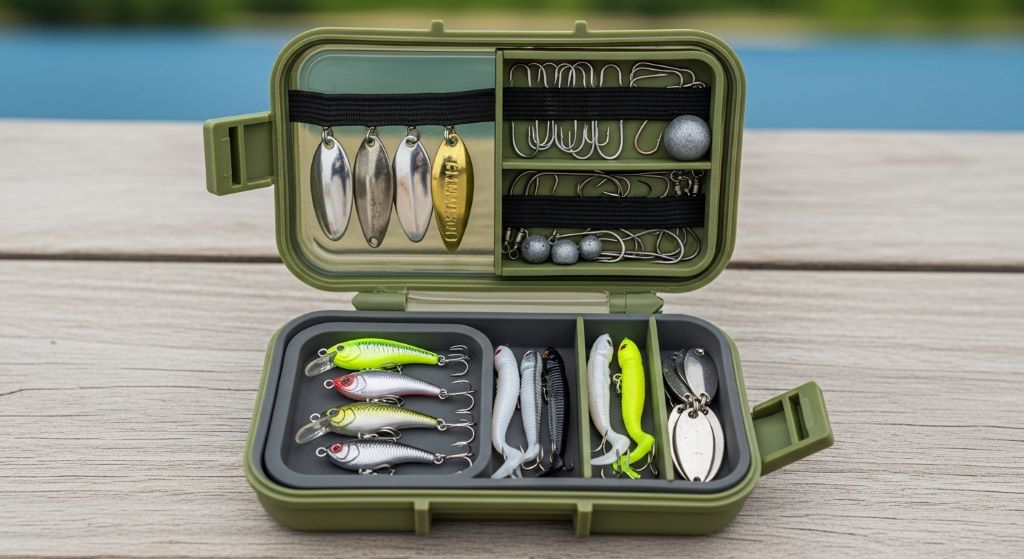
Here are some essentials to include:
- A selection of soft plastic worms and grubs in natural colors
- A few small spinnerbaits or inline spinners
- Jig heads in different weights (1/8 oz to 3/8 oz)
- A small pack of hooks in sizes 4 to 1/0
- A few split-shot sinkers for adjusting depth
- A compact pair of pliers and a line cutter
Store everything in a small waterproof case or zip-lock bags. This keeps your gear organized and protects it from moisture during travel.
Line Choice for Traveling Anglers
Fishing line is easy to overlook, but it matters a great deal. Monofilament line is affordable, easy to manage, and works well in most conditions. It is also forgiving for beginners, since it has some natural stretch that helps absorb sudden strikes.
Braided line is stronger and thinner for the same pound test, which means you can carry more of it on a smaller reel. However, it requires practice to use well and can be harder to manage if you are just starting out.
A 6 to 10-pound monofilament line is a good all-purpose choice for freshwater fishing. For light saltwater fishing, bump up to 12 to 17-pound test. Spool your reel before your trip so you are ready to fish as soon as you arrive.
Packing and Protecting Your Gear
Packing your gear correctly can prevent damage and save you a lot of frustration. For multi-piece rods, use a rod tube or a padded rod bag. These are inexpensive and protect your rod from breaking in luggage.
Wrap your reel in a soft cloth or store it in a small pouch. Keep hooks and lures in a sealed container to prevent injury and to stop them from tangling. Place heavier items at the bottom of your bag and lighter items on top.
If you are flying, check airline rules about hooks and knives in carry-on bags. In most cases, fishing hooks are allowed in checked luggage but not in carry-on. A small pair of fishing scissors, however, may be permitted if the blades are short enough.
Where to Fish When You Travel
Part of the joy of traveling with fishing gear is discovering new spots. Many destinations have public fishing areas that do not require a guide or private access. Local fishing apps and tourism websites often list nearby lakes, rivers, and coastal access points.
Always check local fishing regulations before you cast. Most regions require a fishing license, and rules about catch limits or restricted species vary widely. You can often purchase a short-term or day license online before your trip or at a local bait shop.
Talking to locals is also one of the best strategies. They often know the best spots, the right time of day to fish, and which bait works in that area. A quick conversation at a local tackle shop can save you hours of trial and error.
Renting vs. Buying When Abroad
Sometimes it makes more sense to rent gear at your destination rather than carrying your own. Many fishing resorts, lodges, and even some tackle shops offer rental equipment by the day. This is especially useful for one-time trips to remote locations.
However, if you fish frequently while traveling, owning your own gear is more economical over time. Consistent use of the same rod and reel also helps you develop better technique. You know how your gear behaves, and that familiarity translates to better results on the water.
Conclusion
Fishing on the go does not have to be complicated or expensive. By choosing compact, multi-piece or telescopic rods, a simple spinning reel, and a small but smart tackle kit, you can enjoy great fishing anywhere in the world. Prioritizing beginner rods and low-cost fishing gear that balances quality and portability allows you to fish more often without overspending. Remember to check local regulations, pack your gear carefully, and stay open to discovering new fishing spots along the way. The right setup will fit in your bag and serve you well on every adventure.
Frequently Asked Questions
What is the best type of rod for frequent travelers?
A multi-piece or telescopic rod is ideal for frequent travelers. These rods break down into short sections that fit easily into luggage or a backpack, making them very convenient for travel.
Can I bring fishing hooks on an airplane?
In most cases, fishing hooks must be packed in checked luggage rather than carry-on bags. Always check the airline’s specific rules and your destination country’s customs regulations before flying.
How much should I spend on travel fishing gear?
A basic but functional travel fishing setup can cost between $30 and $80. A combo rod and reel set in this price range is often enough for recreational fishing in most freshwater and light saltwater environments.
Do I need a fishing license when traveling to another country?
Yes, most countries and regions require a valid fishing license. Requirements and fees vary by location. Many areas offer short-term or day licenses that are easy to purchase online or at local bait shops.
Is monofilament or braided line better for travel fishing?
Monofilament line is generally the better choice for most traveling anglers. It is affordable, easy to manage, and works well across a variety of fishing conditions. Braided line is stronger but requires more experience to handle effectively.
Related Topics:
Top 25 famous beaches around the world
How to Find the Best Tourist Places Near Statue of Unity