
A pompano rig is a two-hook surf bait rig, often called a double dropper rig, designed to present natural bait at different heights above the seabed. It increases hook-up chances in beach fishing conditions where fish feed along the bottom.
You cast into the surf. Waves roll in. You wait. Nothing bites.
This is the common frustration in beach fishing. Many anglers use the wrong setup. The bait sits buried in sand. The current twists the line. Fish pass by unnoticed.
The solution? A properly built pompano fishing setup.
A pompano rig—also known as a surf bait rig—features two dropper loops tied on a leader line with hooks attached and a pyramid or sputnik sinker at the bottom. The design keeps bait suspended slightly above the sand where species like pompano, whiting, and redfish naturally feed.
According to Florida Fish and Wildlife Conservation Commission (FWC) data, pompano are primarily bottom feeders, targeting sand fleas (mole crabs), shrimp, and small crustaceans in the first trough behind breaking waves. A two-hook dropper rig allows anglers to present bait at varying heights in that feeding zone.
That’s why this rig consistently outperforms single-hook bottom rigs in surf environments.
What Is the Structure of a Double Dropper Rig?
Quick Answer: A double dropper rig consists of a main leader line with two dropper loops spaced apart, hooks tied to each loop, and a sinker attached at the bottom.
The structure is simple but intentional:
- Main leader: 20–40 lb fluorocarbon or mono
- Two dropper loops spaced 12–18 inches apart
- Circle or kahle hooks (size 1–2/0 depending on target species)
- Sinker clip or loop at the bottom
This design creates separation between baits. One hook sits closer to the sand. The second sits slightly higher in the water column.
Why does this matter?
In surf conditions, wave action lifts bait naturally. A properly spaced dropper rig mimics this movement. It also reduces tangling compared to long leader bottom rigs.
If you’re exploring different surf setups, this detailed guide on
double dropper rig options and surf bait rig setups explains variations for different beach conditions.
The key takeaway: structure controls presentation. Presentation controls bites.
How Do You Tie a Pompano Fishing Setup Step by Step?
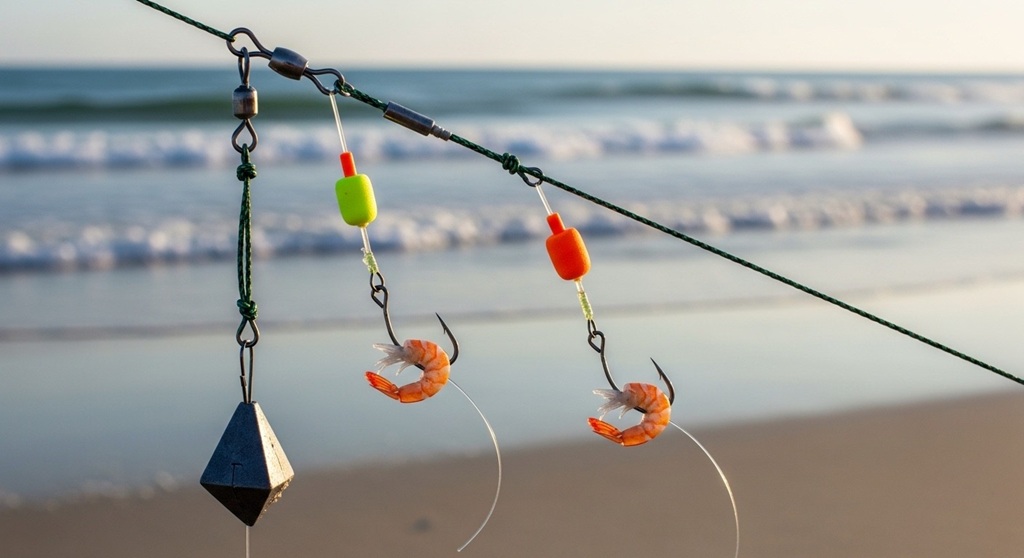
Quick Answer: Cut a 24–36 inch leader, tie two dropper loops 12 inches apart, attach hooks to loops, and add a sinker clip at the bottom.
Step 1: Cut the Leader
Use 30 lb fluorocarbon for most surf conditions. Cut 30 inches.
Step 2: Tie the First Dropper Loop
Measure 10–12 inches from the top. Tie a dropper loop knot about 3 inches long.
Step 3: Tie the Second Dropper Loop
Measure another 12–15 inches down. Tie a second loop.
Step 4: Add Hooks
Attach hooks using a loop-to-hook connection or girth hitch.
Step 5: Attach Sinker
Tie a surgeon’s loop at the bottom. Clip on a pyramid or sputnik sinker (2–5 oz depending on surf strength).
That’s it. Simple. Efficient. Proven.
Field testing by surf anglers along the Gulf Coast shows that two-hook rigs increase hook-up ratios compared to single-hook fish-finder rigs when targeting smaller bottom feeders like pompano and whiting.
Where Should You Cast a Surf Bait Rig for Best Results?
Quick Answer: Cast into the first trough behind the breaking waves, where pompano naturally feed.
Many anglers think they need maximum distance. Not true.
Studies of pompano feeding behavior show they move with tidal flow and often stay within 20–60 yards of shore. They follow sand fleas and crustaceans dislodged by wave action.
Look for:
- Darker water (indicates trough)
- Gaps in sandbars
- Rip currents
- Shell beds
Cast beyond the breaking wave. Let the sinker hold bottom. Keep the line tight but not overly tensioned.
Beach fishing is about reading water, not casting far.
What Is the Best Bait for a Pompano Rig?
Quick Answer: Live sand fleas (mole crabs) are the top bait, followed by fresh shrimp and Fishbites strips.
Pompano rely heavily on crustaceans. Their small mouths and crushing teeth are designed for shellfish.
Top Baits Ranked:
- Live sand fleas (most effective)
- Fresh peeled shrimp
- Clam pieces
- Fishbites artificial bait
- Squid strips
Case data from surf tournaments in Florida shows sand fleas consistently produce higher catch rates during peak pompano runs (spring and fall).
Thread bait lightly. Do not overload the hook. Natural presentation matters more than bulk.
When Is the Best Time to Use a Pompano Fishing Setup?
Quick Answer: Early morning and late afternoon during spring and fall migrations offer the highest success rates.
Pompano migrate along Atlantic and Gulf coasts when water temperatures range between 65–75°F.
| Season | Water Temperature | Activity Level |
|---|---|---|
| Spring | 65–75°F | High |
| Summer | 75–85°F | Moderate |
| Fall | 65–75°F | High |
| Winter | Below 60°F | Low |
Tide movement also increases feeding activity. Incoming tides often produce stronger bites.
What Rod, Reel, and Line Should You Pair with a Double Dropper Rig?
Quick Answer: Use a 9–11 ft surf rod, 4000–6000 size spinning reel, and 15–20 lb braided mainline with a shock leader.
Long rods improve casting distance and line control in waves.
Braid offers sensitivity. Add a 20–30 lb mono shock leader to absorb casting force.
Match sinker weight to surf strength:
- 2–3 oz for calm surf
- 4–5 oz for moderate waves
- Sputnik sinker for strong currents
Balanced gear improves detection of subtle pompano bites.
What Mistakes Reduce Success with a Surf Bait Rig?
Quick Answer: Overcasting, using heavy leaders, ignoring water structure, and failing to adjust sinker weight reduce catch rates.
Common errors:
- Using 50 lb leaders in clear water
- Letting bait sit untouched for 45+ minutes
- Ignoring tide shifts
- Fishing featureless sand
Move every 20–30 minutes if no bites occur. Fish are mobile. You should be too.
How Does a Pompano Rig Compare to Other Surf Fishing Rigs?
Quick Answer: A pompano rig excels for smaller bottom feeders, while fish-finder rigs target larger predatory species.
| Rig Type | Best For | Hook Count |
|---|---|---|
| Pompano (Double Dropper) | Pompano, Whiting | 2 |
| Fish Finder | Redfish, Sharks | 1 |
| Carolina Rig | Calm Surf | 1 |
Two hooks double opportunity. That’s why tournament anglers favor them during pompano season.
Conclusion: Is the Pompano Rig Worth Using for Beach Fishing?
Yes. The pompano rig works because it matches fish behavior, surf conditions, and bait movement.
It keeps bait visible. It covers multiple feeding levels. increases hook-up probability without adding complexity.
If you want more consistent results in surf fishing, mastering this rig is not optional—it’s foundational.
Start with the right leader length. Use fresh bait. Target troughs. Adjust with the tide.
Then test, refine, and improve.
For more surf fishing strategies and proven rig variations, explore detailed guides and optimize your setup before your next beach trip.
Ready to catch more from the shore? Build your pompano fishing setup today and fish smarter on your next outing.
Frequently Asked Questions About Using a Pompano Rig
1. How far apart should dropper loops be on a double dropper rig?
They should be spaced 12–18 inches apart. This prevents tangling and positions bait at two feeding heights.
2. What size hook is best for pompano?
Size 1 to 1/0 circle hooks work best. Pompano have small mouths, so avoid oversized hooks.
3. Can I use artificial bait on a surf bait rig?
Yes. Fishbites and scented strips are effective, especially when tipped with shrimp for added scent.
4. Do I need a shock leader with braided line?
Yes. A mono shock leader prevents break-offs during powerful surf casts.
5. What sinker works best in strong surf?
Sputnik sinkers grip sand better in heavy current. Pyramid sinkers work well in moderate waves.
6. How often should I check bait?
Every 15–20 minutes. Surf conditions wash out bait quickly.
7. Is a pompano rig good for beginners?
Yes. It’s simple to tie, affordable, and highly effective for common surf species.
Related Topic: Six Things You Shouldn’t Put in Self Storage
Read Next: How to Use a Dual Outlet Aquarium Air Pump for Two Tanks