Freshly installed garage door openers should do more than raise and lower a door. That final setup includes checking the safety sensors, reversal response, wiring, travel limits, and other controls that decide how the door reacts when something enters its path. Proper testing matters because a motor can appear to work normally while an alignment or calibration problem leaves a safety feature unreliable.
The Photo-Eye Sensors Have to See Each Other Clearly
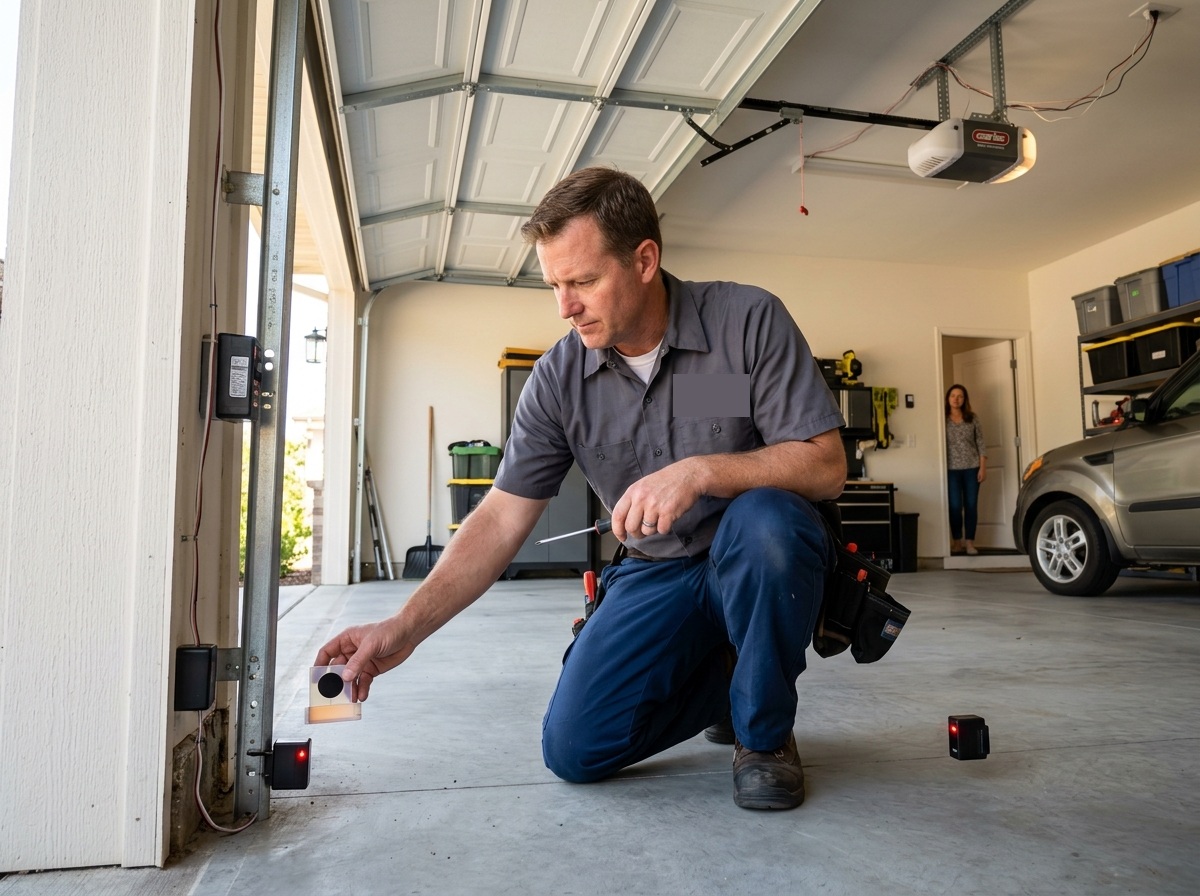
Photo-eye sensors sit near the bottom of the tracks and send an invisible beam across the garage opening. Each unit must face its partner at the correct height and angle, since a small bump to a bracket can interrupt communication even when nothing is blocking the doorway. Technicians completing garage door opener installation normally confirm the indicator lights, sensor position, mounting stability, and beam connection before relying on the system.
Why Does Sensor Alignment Matter After the Opener Starts Working?
Alignment problems often show up as a door that begins to close and then reverses for no obvious reason. Even slight movement in a track bracket, loose mounting hardware, or a sensor aimed across an uneven floor can break the beam and make the opener treat the opening as blocked. Installers check both sides rather than simply moving one sensor until the warning light changes.
Sunlight can also interfere with certain photo-eye systems when strong glare reaches the receiving sensor at particular times of day. Dust, spiderwebs, moisture, paint, or storage items near the lens may create similar trouble after installation. Testing the beam from several positions helps confirm that the system responds to a real obstruction instead of passing an object because the sensors were mounted too high, angled poorly, or left unstable.
Contact Reversal Checks What Happens After the Door Meets Resistance
Reversal testing is separate from the photo-eye test because it checks how the opener reacts after the moving door contacts an object. During this check, the installer follows the opener manufacturer’s procedure to make sure the door stops and reverses rather than continuing to push downward. Placing the approved test object correctly matters, since an inaccurate test may give a false impression that the safety response is properly adjusted.
Force and Travel Settings Need to Match the Actual Door
Force settings control how much resistance the opener will tolerate before stopping or reversing, while travel settings tell the motor where the fully open and fully closed positions are. Because door weight and balance affect both adjustments, technicians cannot treat factory defaults as perfect for every garage. Qualified installers cycle the door several times and watch for hard stops, bouncing, incomplete closing, or unnecessary pressure against the floor.
Excessive force can hide a mechanical problem by making the opener push through resistance that should be investigated. Balanced movement should come from properly working springs, rollers, hinges, tracks, and cables rather than a motor set to overpower them. Anyone searching for a garage door repairman near me may need a mechanical inspection first if sensor or force tests reveal that the door feels unusually heavy or binds during travel.
Sensor Wiring Gets Checked for More Than Visible Damage
Wiring problems can create intermittent faults that are harder to spot than a completely dead sensor. Loose staples, pinched low-voltage wire, reversed connections, damaged insulation, or terminals that are not fully seated may cause warning lights to flicker or the door to reverse unpredictably. Careful installers inspect the wire path and connection points so vibration from normal operation does not turn a small installation issue into a recurring service call.
Smart Controls and Backup Features Should Be Tested Too
Modern openers may include app alerts, remote status checks, battery backup, automatic closing rules, and connected lighting in addition to basic safety sensors. Battery systems should be tested to confirm the opener can perform its intended functions during an outage rather than simply showing that a backup unit is present. After garage door opener installation, technicians may also verify that app notifications match actual door movement and that remote commands do not interfere with wall-control operation.
Smart features still depend on a mechanically sound door. Remote monitoring cannot correct poor balance caused by worn springs, and replacing garage door spring components may be necessary before a new opener can operate correctly. Homeowners planning garage door installation at the same time can benefit from matching the door, spring system, opener capacity, sensors, and connected controls as one complete setup.
A Final Safety Check Brings the Whole System Together
Final testing should cover the photo eyes, contact reversal, manual release, travel limits, force settings, wall controls, remotes, and any connected features included with the opener. Snappy Doors offers professional garage door opener installation, including smart garage door systems, and can evaluate sensor performance alongside the mechanical condition of the door, including issues that may require repair or spring service. Their team can also help homeowners comparing an overhead door company near me with garage door installation needs understand whether the opener, safety controls, and door hardware are working together as intended during everyday operation.