
Learning to surf is one of the most exciting decisions you can make. The ocean, however, does not wait for anyone. Before you paddle out, you need the right equipment in your hands. Choosing gear as a new surfer can feel confusing, but it does not have to be. This guide walks you through every essential piece of surf basics and starter equipment so you can hit the water with confidence.
Why Your First Gear Choice Matters More Than You Think
Many beginners make the mistake of buying gear that looks cool rather than gear that works. This can slow your learning down by weeks, or even months. The right equipment helps you catch waves faster, stay safer, and enjoy the experience much more. Therefore, knowing what to look for before you spend a single dollar is absolutely essential.
Good beginner gear is designed around one goal: helping you learn. It is not about performance at this stage. It is about building your foundation the right way.
Start With the Right Surfboard
The surfboard is the single most important piece of equipment you will choose. For beginners, bigger is almost always better. A longer, wider, and thicker board gives you more stability and makes it easier to catch waves.
Foam Boards Are Your Best Friend
Soft-top foam boards, often called “foamies,” are the top choice for new surfers. They are forgiving when you fall, which you will do often. They float well, which helps you paddle and pop up with less effort. Additionally, they are far less dangerous than hard fiberglass boards in shallow water or crowded lineups.
Look for a foam board between 8 and 9 feet long. This length gives you enough surface area to stay balanced while you are still figuring out your footing. Avoid shortboards entirely at this stage. They are designed for experienced surfers and will only frustrate you early on.
Board Volume Explained Simply
Volume refers to how much foam or material is inside the board. Higher volume means more float. As a beginner, you want a board with plenty of volume, at least 60 to 80 liters depending on your body weight. Most foam beginner boards already come in the right volume range, which is another reason they are a smart starting point.
Choosing the Right Wetsuit
The ocean is cold in most places, even in summer. A wetsuit keeps your body temperature stable so you can stay in the water longer and focus on learning. However, not all wetsuits are the same, and buying the wrong thickness can make your session miserable.
Understanding Wetsuit Thickness
Wetsuits are measured in millimeters. A 3/2mm wetsuit means 3mm of neoprene on the body and 2mm on the arms. This is the most common choice for water temperatures between 60°F and 70°F (15°C to 21°C). In warmer tropical waters, a shorty or even a rash guard may be all you need.
When trying on a wetsuit, it should feel snug but not restrictive. You need to be able to move your arms in full circles without the suit pulling tightly across your shoulders. Therefore, always try before you buy if possible, or check the brand’s size chart carefully when ordering online.
New vs. Second-Hand Wetsuits
Buying a second-hand wetsuit can save you money, but check it carefully for tears, worn seams, or damaged zippers. A leaking wetsuit defeats its entire purpose. For your first purchase, a mid-range new wetsuit is often the better investment.
Do Not Skip the Leash
A leash is a cord that connects your ankle to your surfboard. It is one of the most important safety tools in the surf basics and starter equipment category. When you fall off your board, the leash keeps it from drifting away or becoming a hazard to other surfers.
Choose a leash that matches your board length. An 8-foot board needs an 8-foot leash. Make sure the calf cuff fits snugly without cutting off circulation. Also, check that the swivel connector moves freely to prevent the cord from tangling during your session.
Leashes wear out over time. Inspect yours before every single session and replace it if you notice any cracks, fraying, or weak spots near the connectors.
Wax, Traction Pads, and Grip
Without grip, you will slide right off your board every time you try to stand. Surfboard wax is the traditional and most affordable solution. You apply it directly to the top of your board to create a sticky surface for your feet.
How to Wax Your Board
Different wax formulas work for different water temperatures. Cold water wax is softer, while tropical wax is harder. Using the wrong type can make the wax either too slippery or too gummy. Buy a base coat first, then layer your temperature-specific wax on top.
Traction pads are a rubber alternative to wax. They stick permanently to the tail of your board and provide grip for your back foot. Many beginners find traction pads useful because they remove the guesswork of waxing. However, most beginners still need wax on the front half of the board as well.
Sun Protection You Cannot Ignore
Spending hours in the ocean under direct sunlight is hard on your skin. Reef-safe sunscreen with SPF 50 or higher is a must. Look for water-resistant formulas and reapply every two hours. A rash guard or surf shirt adds another layer of UV protection and also prevents rash from the board rubbing against your chest and stomach.
Essential Gear Checklist for New Surfers
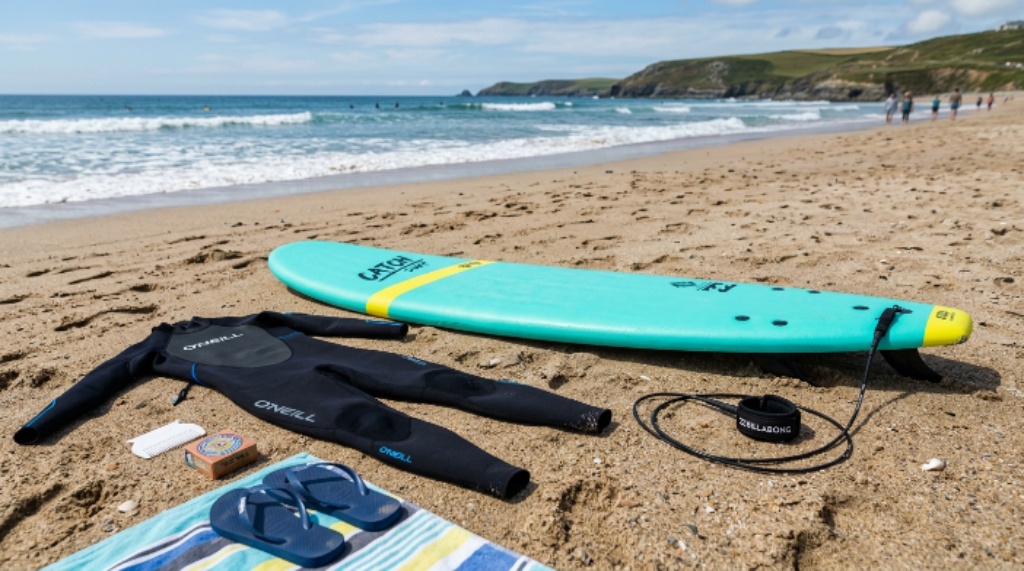
Here is a quick summary of everything you need before your first session:
- Foam surfboard (8 to 9 feet long)
- Correctly sized wetsuit for your local water temperature
- Leash matching your board length
- Surfboard wax in the right formula for your water temperature
- Reef-safe waterproof sunscreen
- Rash guard or surf shirt
Where to Buy Beginner Surfing Gear
Local surf shops are the best place to start. The staff are usually experienced surfers who can give you honest advice based on your local conditions. Additionally, they can help you try on wetsuits and choose the right board size for your height and weight.
Online retailers offer more variety and often lower prices. However, buying without trying carries some risk, especially with wetsuits. If you do shop online, buy from stores with free return policies.
Avoid buying surfboards from general sporting goods stores. The boards sold there are often low quality and poorly suited for actual ocean use. Stick with surf-specific retailers whenever possible.
Conclusion
Choosing the right beginner surfing gear does not need to be overwhelming. Start with a large foam board, match your wetsuit to your local water temperature, and never forget your leash. These three items alone form the core of smart surf basics and starter equipment decisions. Add grip, sun protection, and a rash guard, and you are fully prepared to begin your surfing journey. The ocean rewards patience and preparation. Get the right gear, and the rest will follow naturally.
Frequently Asked Questions
What size surfboard should a complete beginner start with?
A beginner should start with a foam board between 8 and 9 feet long. This size provides maximum stability and makes it much easier to catch and ride waves during the learning phase.
Is a wetsuit necessary for beginner surfers?
It depends on your local water temperature. In cold or cool water, a wetsuit is essential for safety and comfort. In warm tropical water, a rash guard may be enough. Always check the water temperature before your session.
How much should a beginner spend on surfing gear?
A realistic starting budget is between $200 and $500 for a complete beginner setup. This includes a foam board, leash, wetsuit, wax, and sun protection. Buying second-hand gear can reduce costs significantly.
Can beginners learn to surf without taking lessons?
While it is possible to teach yourself with videos and practice, taking at least a few lessons with a certified instructor is highly recommended. Lessons help you develop safe habits and correct technique from the very beginning.
How do I know if my wetsuit fits correctly?
A properly fitting wetsuit should feel snug all over with no large gaps or folds. You should be able to move your arms freely above your head. If there is a lot of loose fabric around the neck, chest, or knees, the suit is too big.
Related Topics:
How to Store Surfboard Accessories the Smart Way
How to Choose the Best Cruiser Skateboard for Easy Riding in 2026