
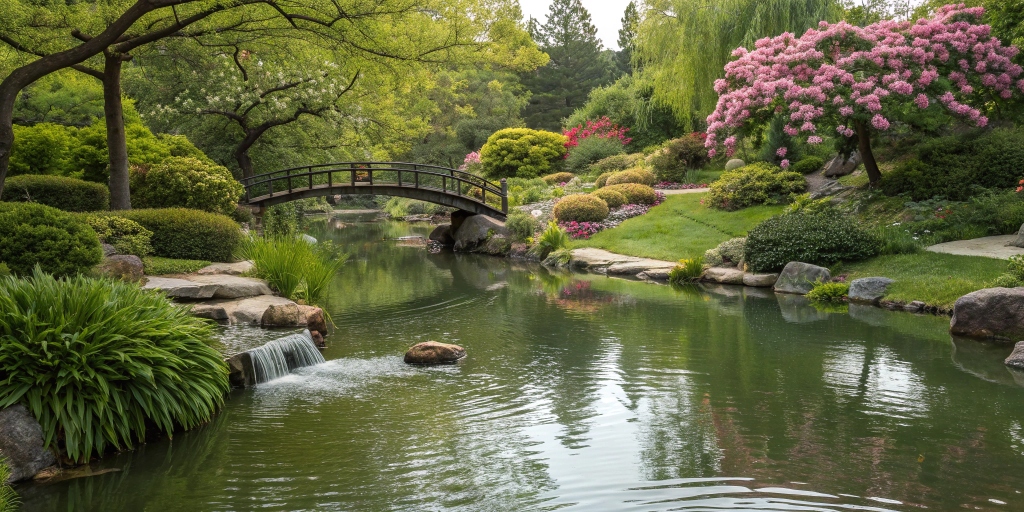
Water gardens have long been celebrated for their serene beauty and the calming effect they bring to any landscape.
The gentle sound of flowing water, the sight of vibrant aquatic plants, and the presence of shimmering fish can transform
an ordinary backyard into a tranquil oasis. This article delves into the art and science of designing water gardens,
offering insights into creating your personal sanctuary of peace.
The Allure of Water Gardens
Water gardens, also known as aquatic gardens, are designed to house water plants and may include small ponds, streams,
or fountains. The allure of these gardens lies in their ability to draw on the natural element of water, an essential
life force, creating a micro-ecological environment that is both aesthetically pleasing and functionally beneficial.
The sight and sound of water can have an incredibly calming effect, reducing stress and promoting relaxation. Moreover,
water gardens attract a variety of wildlife, from birds and butterflies to frogs and dragonflies, enriching the
biodiversity of your landscape.
Design Principles for Water Gardens
Designing a water garden involves a blend of creativity and practicality. Here are some key considerations:
1. Location and Size
Begin by selecting the right location for your water garden. Ideally, it should receive ample sunlight for aquatic plants
to thrive while being sheltered from excessive wind. The size of your garden will depend on your available space, budget,
and personal preference. A small backyard can accommodate a compact pond or a series of cascading pots, while larger
areas can host expansive ponds with multiple features.
2. Water Features
Water features such as fountains, waterfalls, and streams add dynamic movement and sound to your garden. Consider
incorporating a waterfall or a gently flowing stream for a continuous water source that enhances the sensory experience.
These features also help aerate the water, creating a healthier environment for plants and fish.
3. Plant Selection
Aquatic plants are the stars of any water garden. Choose a mix of submerged, floating, and marginal plants to create a
balanced ecosystem. Popular choices include water lilies, lotus, and water hyacinths. These plants not only provide
visual interest but also offer shade and shelter for fish and other aquatic life.
4. Wildlife Integration
A well-designed water garden can serve as a habitat for various wildlife. Consider adding native plants and providing
elements like rocks and logs where creatures can hide or bask. Introducing fish such as koi or goldfish can add color
and movement to your pond, but be mindful of the ecological balance to prevent overpopulation.
Maintenance and Sustainability
Maintaining a water garden is essential to preserving its beauty and ecological balance. Regular tasks include checking
water levels, cleaning filters, and trimming overgrown plants. It’s important to use natural, non-toxic methods for pest
and weed control to protect the delicate ecosystem.
Sustainable practices can also enhance your garden’s longevity. Consider installing a rainwater collection system to
replenish water levels naturally, and opt for solar-powered pumps to reduce energy consumption.
Conclusion
Designing a water garden is an enriching endeavor that combines art, nature, and science. The resulting haven of
tranquility can transform any outdoor space into a retreat for relaxation and reflection. Whether you’re seeking
professional assistance or embarking on a DIY project, be sure to explore local resources for Landscaping near me to help bring your vision to life.
As you embark on creating your water garden, remember that the journey is just as rewarding as the destination. With
thoughtful planning and care, you’ll cultivate a serene environment that offers endless enjoyment and a deeper connection
to nature.