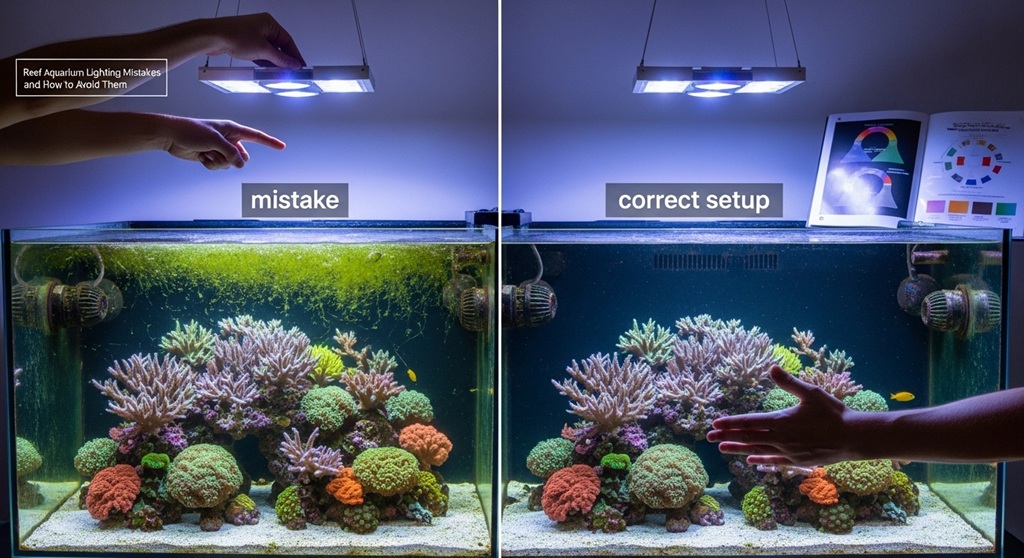
Lighting is one of the most critical factors in a reef aquarium. Corals rely on light to fuel photosynthesis through symbiotic algae called zooxanthellae. When lighting conditions are wrong—too strong, too weak, or poorly scheduled—corals experience stress. The result can include slow growth, dull coloration, or severe coral bleaching.
Many reef hobbyists focus heavily on filtration, water chemistry, and coral placement but underestimate how sensitive corals are to light intensity and spectrum. According to research published by the National Oceanic and Atmospheric Administration (NOAA), coral bleaching occurs when environmental stress causes corals to expel zooxanthellae. While temperature is a major trigger in the ocean, in aquariums one of the most common triggers is poor lighting management.
Modern reef lighting systems—especially LED fixtures—offer powerful output and advanced controls. However, this flexibility also increases the risk of reef lighting errors. Many beginners unintentionally expose corals to sudden intensity changes, incorrect PAR levels, or unstable light cycles.
This guide explains the 7 most common reef aquarium lighting mistakes and how to avoid them. You will also learn practical aquarium lighting tips, understand common coral bleaching causes, and discover how to build a stable lighting system that supports coral growth and color.
What Are the Most Common Reef Aquarium Lighting Mistakes?
The most common reef lighting errors include using excessive light intensity, ignoring PAR measurements, running lights too long, choosing the wrong spectrum, placing lights incorrectly, skipping acclimation, and failing to maintain lighting equipment.
Each mistake disrupts coral photosynthesis. When zooxanthellae receive either too much or too little light energy, they produce oxidative stress. Over time this damages coral tissue and leads to bleaching.
Understanding these mistakes helps reef keepers prevent coral stress and maintain stable reef environments.
1. Why Is Too Much Light One of the Biggest Causes of Coral Bleaching?
Short answer: Excessive light intensity overwhelms coral photosynthesis and causes oxidative stress, leading to coral bleaching.
Many reef aquariums today use powerful LED systems designed to replicate tropical sunlight. While these systems are effective, they can easily exceed safe light levels for corals if not configured correctly.
Corals rely on zooxanthellae algae to convert light into energy. When the light intensity exceeds what the algae can process, excess energy produces reactive oxygen species. These molecules damage coral tissue and cause the coral to expel the algae.
Typical PAR Requirements for Coral Types
| Coral Type | Recommended PAR Range |
|---|---|
| Soft Corals | 50–100 PAR |
| LPS Corals | 75–150 PAR |
| SPS Corals | 200–350 PAR |
Many reef tanks accidentally reach PAR levels above 400 when lights are run at maximum intensity. This is a common coral bleaching cause in home aquariums.
Aquarium Lighting Tips
- Start LED intensity below 40–50%
- Measure PAR before adding sensitive corals
- Increase intensity gradually over several weeks
2. Why Do Reef Hobbyists Ignore PAR Measurements?
Short answer: Many hobbyists rely on brightness instead of PAR data, which leads to inaccurate lighting levels for corals.
PAR (Photosynthetically Active Radiation) measures the amount of usable light available for photosynthesis. Unlike brightness, PAR indicates the actual energy reaching coral tissue.
A 2020 reef aquarium study published in Coral Reef Ecology Journal showed that aquariums using PAR meters maintained coral survival rates nearly 30% higher than tanks relying only on visual brightness.
Without PAR measurements, reef keepers often run lights too strong or too weak. Both conditions reduce coral growth and color development.
How to Avoid This Reef Lighting Error
- Use a PAR meter when installing new lighting
- Measure multiple locations in the aquarium
- Adjust coral placement based on PAR zones
This simple step prevents many reef lighting errors and ensures stable coral health.
3. How Does Running Lights Too Long Damage Corals?
Short answer: Excessive photoperiods stress coral metabolism and increase algae growth.
Reef hobbyists sometimes assume that more light leads to faster coral growth. In reality, corals require a balanced photoperiod to maintain metabolic stability.
Most tropical reefs experience about 10–12 hours of sunlight daily. Replicating this schedule helps maintain natural coral rhythms.
Running lights longer than 12–14 hours increases energy exposure and promotes nuisance algae growth. Algae compete with corals for nutrients and can shade coral tissue.
Recommended Reef Lighting Schedule
| Lighting Phase | Typical Duration |
|---|---|
| Sunrise Ramp | 1–2 hours |
| Peak Intensity | 6–8 hours |
| Sunset Ramp | 1–2 hours |
Automated lighting controllers help maintain consistent schedules and reduce manual errors.
4. Why Is the Wrong Light Spectrum a Common Reef Lighting Error?
Short answer: Corals primarily use blue wavelengths for photosynthesis, and incorrect spectrum settings reduce energy absorption.
Natural reef sunlight contains strong blue wavelengths that penetrate ocean water effectively. Zooxanthellae algae evolved to absorb these wavelengths efficiently.
Modern reef LED systems typically use blue channels around 420–470 nm. This range supports coral growth and fluorescence.
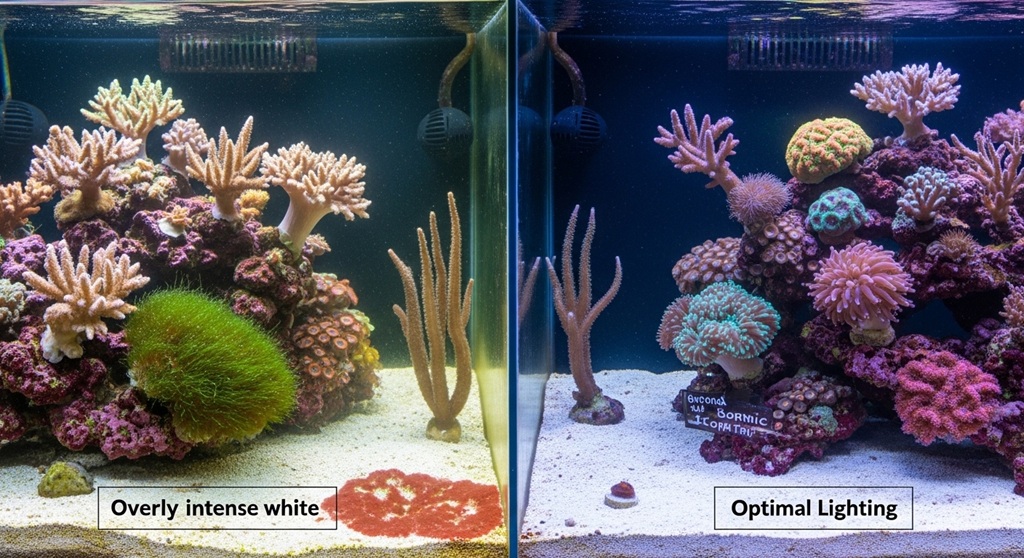
When aquarists increase white channels excessively, the spectrum becomes less efficient for photosynthesis and may stress coral tissue.
Ideal Spectrum Balance
- Blue light dominance (70–80%)
- Moderate violet channels
- Limited white channels
This spectrum closely replicates tropical reef environments.
5. How Does Poor Light Placement Affect Coral Growth?
Short answer: Incorrect fixture placement causes uneven PAR distribution and shadowing.
Even powerful lights can create uneven coverage if mounted incorrectly. Shadowing occurs when rocks or coral colonies block light from reaching lower areas of the tank.
Uneven lighting creates unstable growth patterns. Some corals receive excessive light while others receive too little.
Best Placement Practices
- Mount LED lights 8–12 inches above the water
- Use multiple fixtures for wider tanks
- Check PAR distribution across the aquarium
Proper placement ensures consistent lighting across the reef system.
6. Why Should Corals Be Acclimated to New Lighting?
Short answer: Sudden lighting changes shock coral tissue and disrupt photosynthesis.
Lighting acclimation is one of the most overlooked aquarium lighting tips. When corals move from low light environments to stronger LED systems, they cannot immediately adapt.
A case study from a large reef aquarium facility in Florida observed that corals introduced directly under full LED intensity experienced 50% higher bleaching rates compared with corals acclimated gradually over two weeks.
Acclimation Strategies
- Reduce intensity by 30–50% when introducing new corals
- Increase intensity gradually each week
- Use LED acclimation mode if available
7. Why Is Lighting Maintenance Important in Reef Tanks?
Short answer: Dirty lenses and aging LEDs reduce light output and alter spectrum.
Over time, salt spray, dust, and algae buildup can block light transmission. Even small obstructions significantly reduce PAR levels reaching corals.
Additionally, LED output slowly declines after several years of use. This shift can affect coral growth rates and coloration.
Maintenance Checklist
- Clean LED lenses monthly
- Inspect cooling fans
- Replace aging lighting systems every 4–5 years
Routine maintenance ensures stable reef lighting conditions.
Conclusion: How to Build a Stable Reef Lighting System
Reef aquariums are miniature ecosystems where stability determines long-term success. Lighting plays a central role in coral health, coloration, and growth. When reef hobbyists make lighting mistakes—such as excessive intensity, poor spectrum balance, or unstable schedules—corals respond quickly with stress or bleaching.
Fortunately, these problems are easy to prevent with the right approach. Measuring PAR levels, using proper light schedules, acclimating new corals, and maintaining lighting equipment create a predictable environment where corals thrive.
The key principle is consistency. Corals adapt well to stable conditions but react poorly to sudden changes.
If you are building or upgrading a reef aquarium, review your lighting system carefully. Apply these aquarium lighting tips to avoid common reef lighting errors and reduce coral bleaching causes.
Want healthier corals and stronger reef growth? Start by evaluating your lighting setup today and adjust intensity, spectrum, and schedule for optimal coral performance.
Frequently Asked Questions
What light intensity is best for reef aquariums?
Most reef aquariums operate best between 75 and 350 PAR depending on coral species. Soft corals require lower intensity while SPS corals need stronger light.
Can LED lights cause coral bleaching?
Yes. LED fixtures can produce very high PAR levels. If intensity increases too quickly or exceeds coral tolerance, bleaching can occur.
How long should reef aquarium lights run daily?
Most reef tanks run lights for 8–10 hours of peak intensity with sunrise and sunset ramp periods. Total lighting time typically ranges between 10 and 12 hours.
Do corals need blue light?
Yes. Blue wavelengths between 420 and 470 nm are most effective for coral photosynthesis and fluorescence.
What is the best way to acclimate corals to new lighting?
Reduce lighting intensity by about 40–50% when introducing new corals and gradually increase intensity over 2–3 weeks.
How often should reef lights be replaced?
High-quality LED reef lights typically last 4–5 years before noticeable output decline. Regular maintenance can extend lifespan.
Read More Also: How to Store Surfboard Accessories the Smart Way
Find out: How to Choose Multi-Purpose Waders for Fishing and Hunting